Fiscal policy explained: Have you ever looked at your salary slip and felt that sharp sting seeing how much money is taken away as tax every month?
You work hard, show up every day, pay your taxes on time, yet the roads are still full of potholes, government hospitals have long waiting lines, school education feels average at best, and the price of basic groceries, fuel, and rent keeps rising faster than your salary.
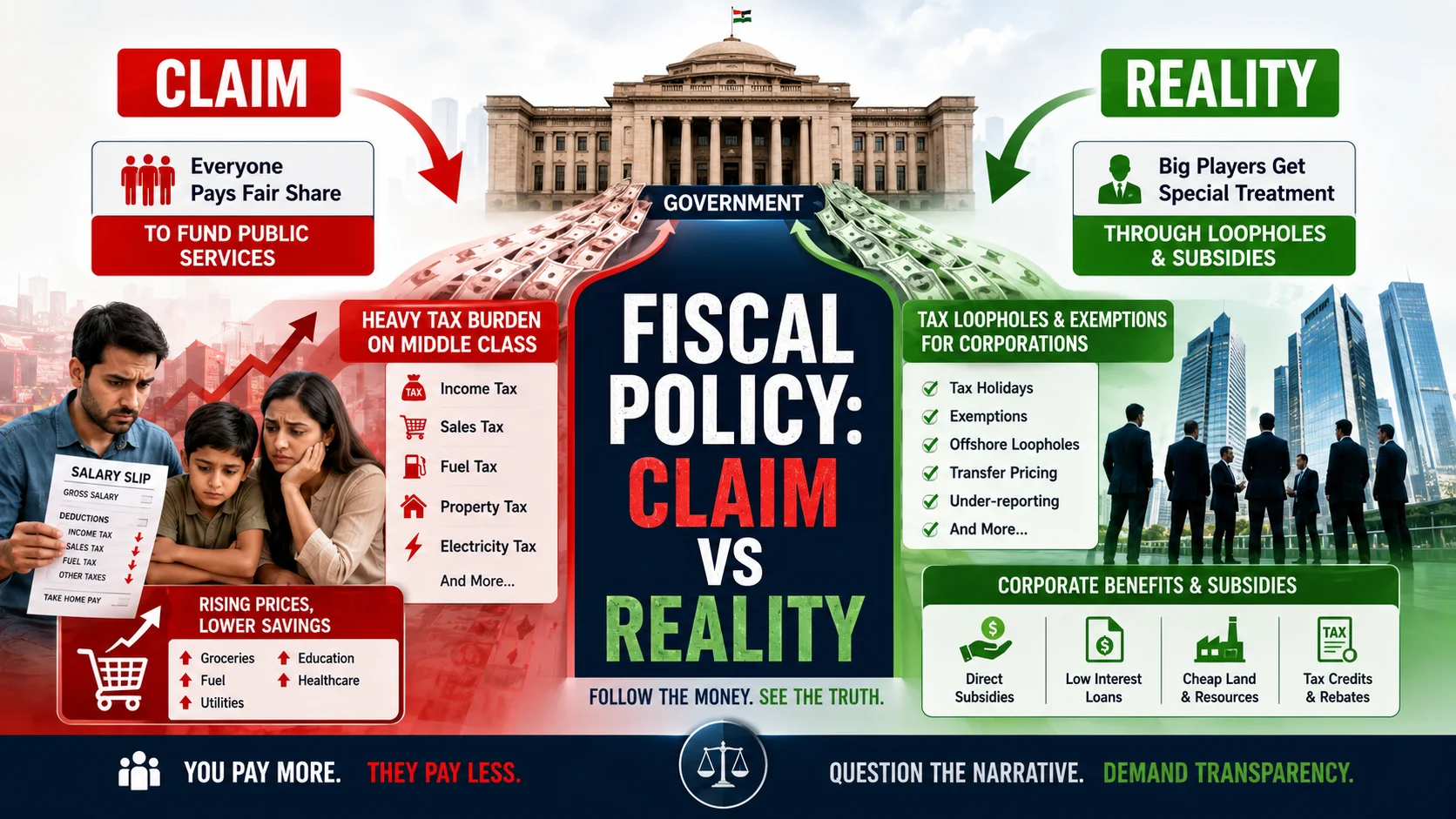
This frustration is incredibly common. There’s a huge gap between what governments claim about fiscal policy and the reality that common people like us experience every single day.
Fiscal policy is how the government collects taxes from you and decides where to spend that money. It has a direct and powerful effect on your salary, savings, loans, cost of living, and overall financial peace. Let’s understand fiscal policy explained in simple, honest words with real-life examples.
What Is Fiscal Policy?
What is fiscal policy? It is the government’s plan for collecting revenue (mainly through taxes) and spending that money on public services like healthcare, education, defense, infrastructure, subsidies, and debt repayment.
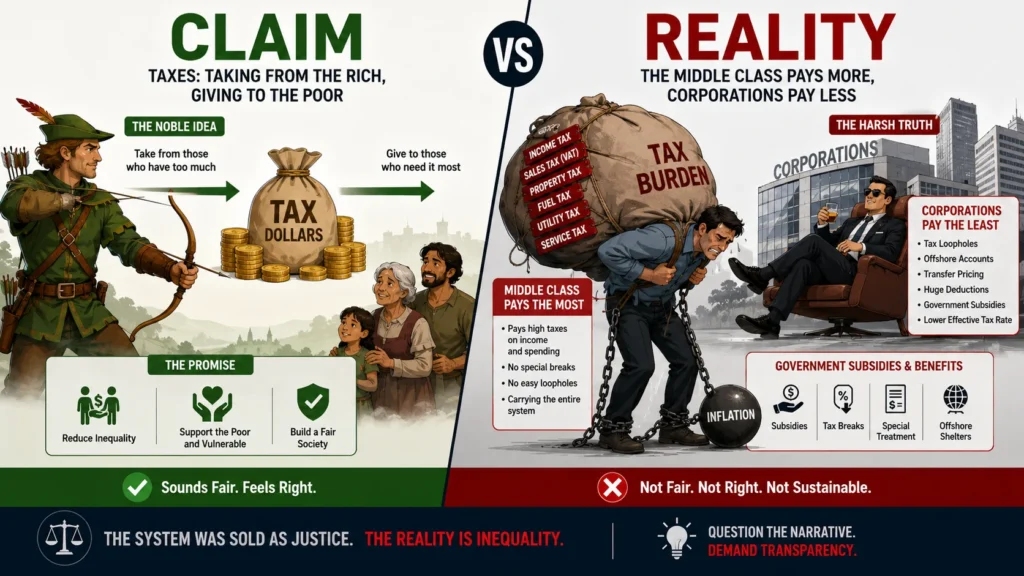
Governments love to present fiscal policy as a noble Robin Hood system: “We take money from the rich and use it for the welfare of the nation and the poor.” It sounds fair, caring, and well-intentioned. But in practice, fiscal policy often works very differently. The middle and working classes usually carry the heaviest burden while big corporations and the wealthy find legal ways to pay significantly less.
How Governments Generate Revenue – Taxes Explained in Detail
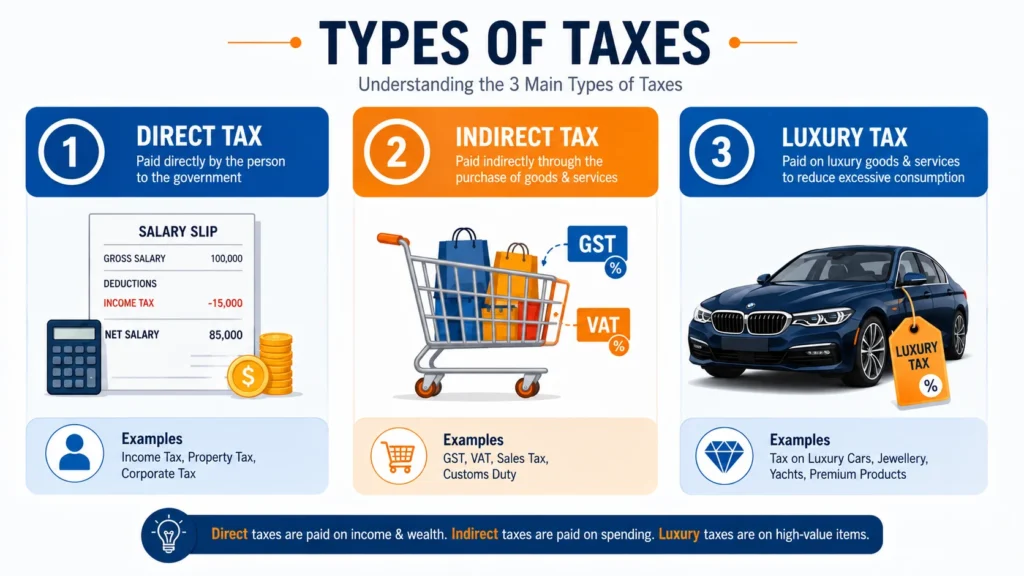
To run the country, governments need massive amounts of money. They collect this money mainly through taxes. Let’s understand the three major types with real-life situations so you can see exactly how they affect you.
1. Direct Taxes (Tax on Your Income)
Direct taxes are charged directly on your income, salary, business profit, freelance earnings, capital gains, etc. The government sets different income brackets and charges higher percentages as your earnings increase. This is called a progressive tax system.
Real-Life Example: Imagine you are a software engineer in the United States earning $85,000 per year. After standard deductions, you might fall into the 24% federal tax bracket. A big portion of your salary is deducted before it even reaches your bank account. You have almost no choice in the matter, your employer deducts it automatically.
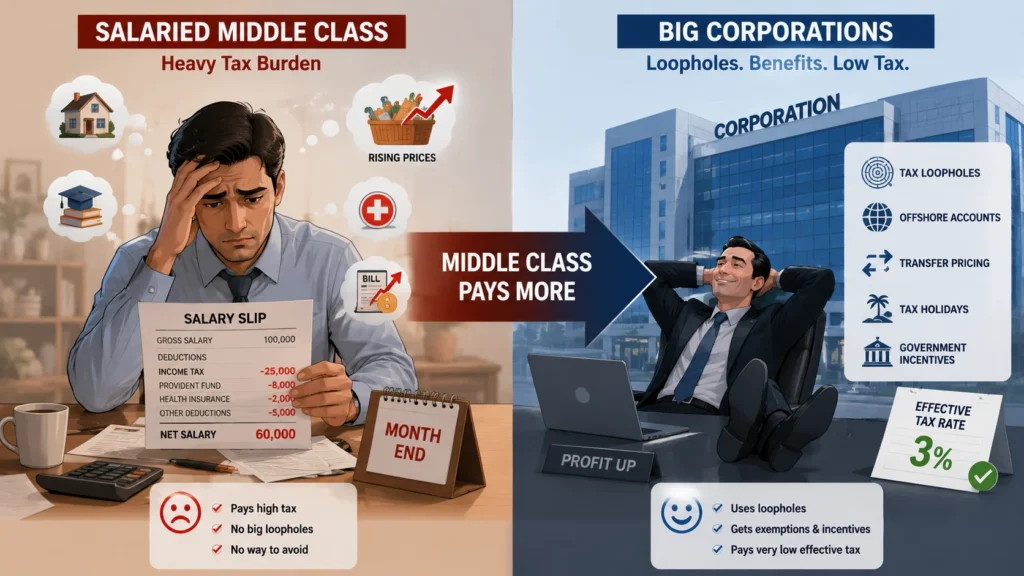
Now compare this to a large corporation earning $5 billion in profit. With teams of expert accountants, lawyers, and tax consultants, they can use legal loopholes, depreciation benefits, tax credits, offshore subsidiaries, and various deductions to bring their effective tax rate down to as low as 10-15%, sometimes even lower in certain years.
This is one of the biggest complaints of the salaried middle class worldwide: You have almost no way to reduce your tax burden, while big companies and ultra-rich individuals have entire departments working full-time to minimize theirs. The system that claims to be “fair and progressive” often ends up putting the heaviest load on regular working people like you and me.
2. Indirect Taxes (You Pay When You Buy Anything)
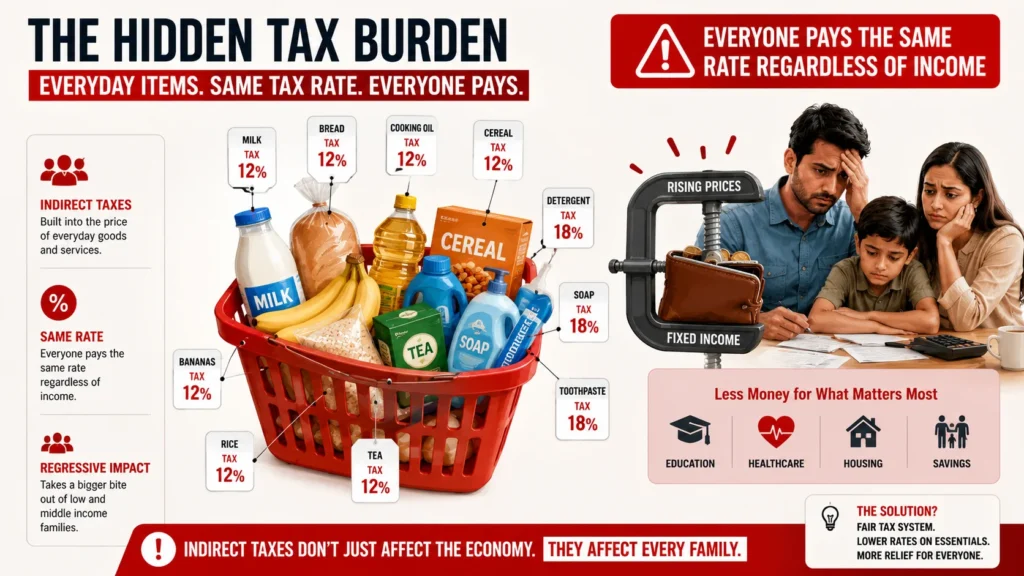
These are taxes you pay indirectly every time you purchase goods or services. This includes sales tax, GST, VAT, excise duty on fuel, and many other hidden taxes on everyday items like groceries, electricity bills, clothes, mobile phones, restaurant meals, etc.
Real-Life Situation: You go to the supermarket with your family to buy monthly groceries. You don’t just pay for the rice, milk, oil, and vegetables; you also pay the embedded indirect tax on every single item. A low-income family buying the same basic essentials pays the same tax rate as a rich person buying luxury items.
When the government increases fuel tax, the effect spreads like wildfire. Transportation costs go up, which increases the price of almost everything: vegetables coming from farms, medicines, packaged food, and even online deliveries.
This is why economists call indirect taxes highly regressive. They take a much larger percentage of income from lower and middle-class families compared to the rich. The poor and middle class spend a bigger portion of their income on basic necessities, so they feel the pain of indirect taxes much more severely.
3. Luxury Taxes
These are additional taxes imposed on expensive, non-essential items such as luxury cars, private jets, high-end watches, designer goods, and yachts.
Reality Check: A billionaire buying a $500,000 luxury car does pay extra tax on it. However, rich people buy luxury goods relatively rarely compared to their total wealth. The actual revenue generated from luxury taxes is usually very small compared to the total tax collection from the entire population.
Meanwhile, the middle class continues to pay heavy direct taxes on their salaries and indirect taxes on daily essentials every single month. This creates a situation where the tax system looks fair on paper, but in practice, it still puts most of the burden on ordinary citizens.
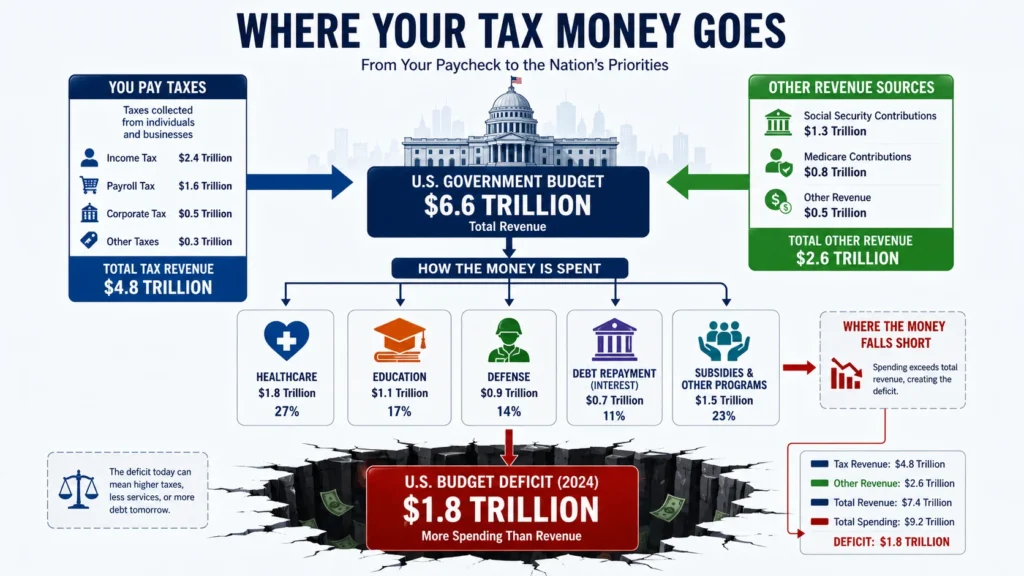
Budgeting and Spending: Where Does Your Tax Money Actually Go?
After collecting taxes, the government prepares an annual budget. In the United States, the federal government recorded a massive $1.8 trillion budget deficit in fiscal year 2025. To cover this gap, they borrow heavily. This borrowing increases the national debt, and eventually ordinary citizens pay for it through higher future taxes or reduced public services.
Conclusion: Time to Become Financially Smart
Governments claim fiscal policy is for the welfare of the people. In reality, poor tax design, political favoritism, corruption, and inefficient spending often make the system work against the common citizen.
The best thing you can do is stop depending completely on the system. Build your own emergency fund, control your spending, create multiple income sources, and make smart financial decisions.
Because no government will ever manage your money better than you can.