Greed in Finance: How It Destroys Wealth and Leads to Financial Catastrophe
Greed in finance is something almost everyone experiences at some point, and it can quietly damage your money if left unchecked.
Have you ever bought something just because it was 50% off, even though you didn’t really need it? Or put money into an investment because someone promised “easy, high returns”? That’s greed in finance influencing your decisions without you fully realizing it.
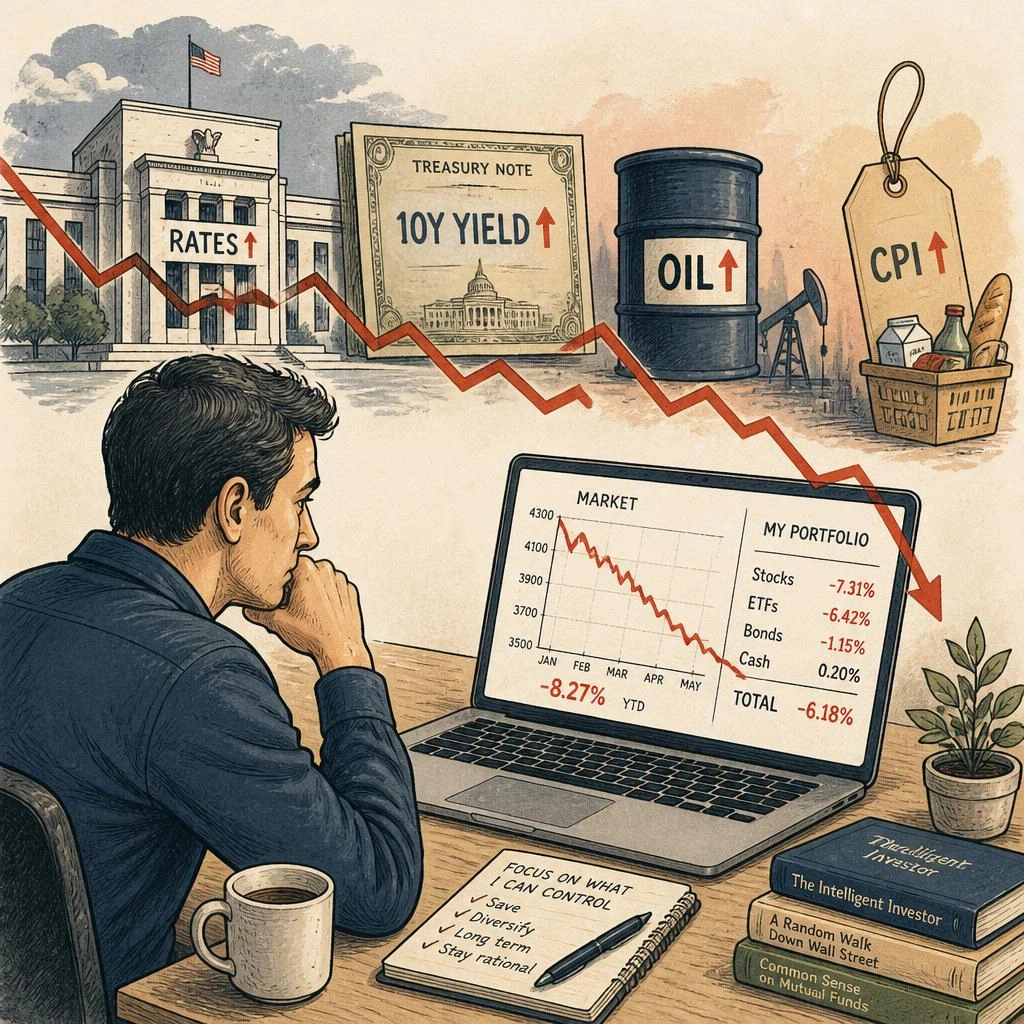
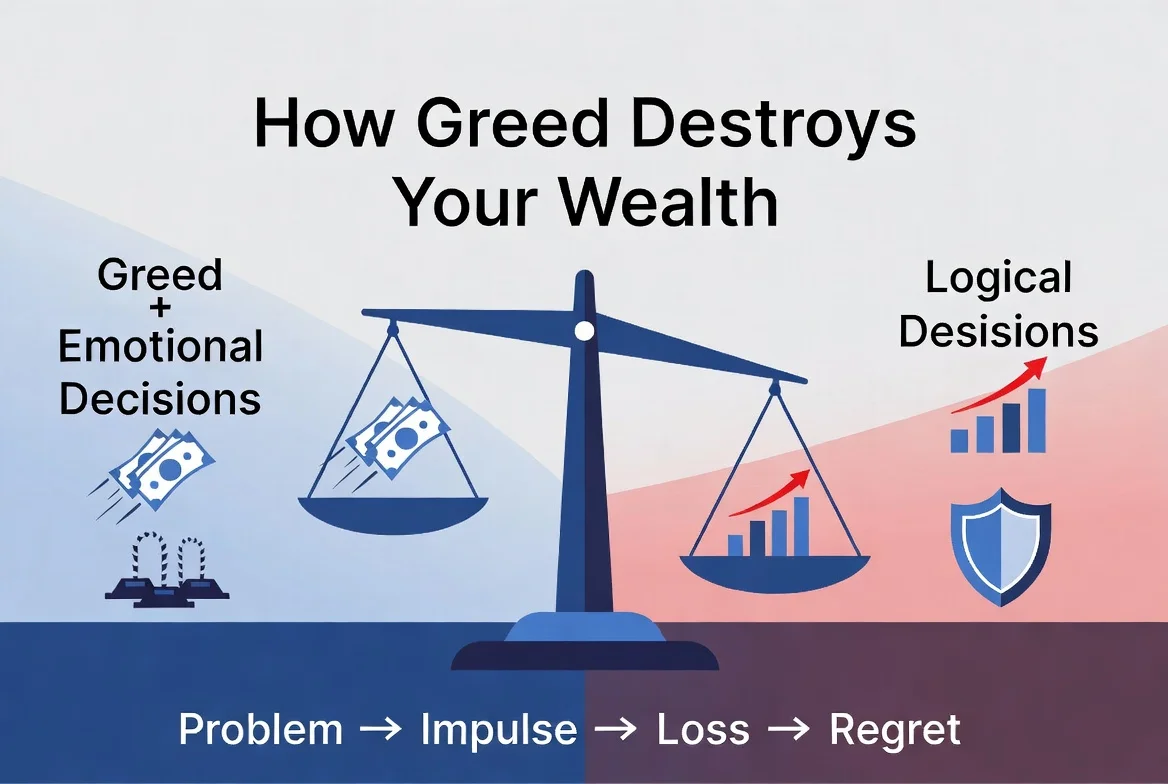
How greed destroys wealth often happens slowly. Greed is a powerful human emotion, and when it comes to money, it can push us into impulsive choices, chasing quick gains, bigger discounts, or unrealistic profits. In the moment, those decisions can feel exciting or even smart. Later, they often lead to regret, financial loss, or unnecessary stress.
In today’s world of constant marketing, get-rich-quick offers, and easy credit, greed in finance shows up more often than we notice. The good news is that once you understand how greed destroys wealth, you can start recognizing it and taking control. Learning to manage financial greed is one of the most valuable steps you can take to protect your money and build long-term financial success.
The Psychology Behind Greed
Greed is an intense desire for more- more money, more possessions, or more profit- often at the expense of logic and caution. It activates when we perceive an opportunity for personal gain, whether real or manipulated.
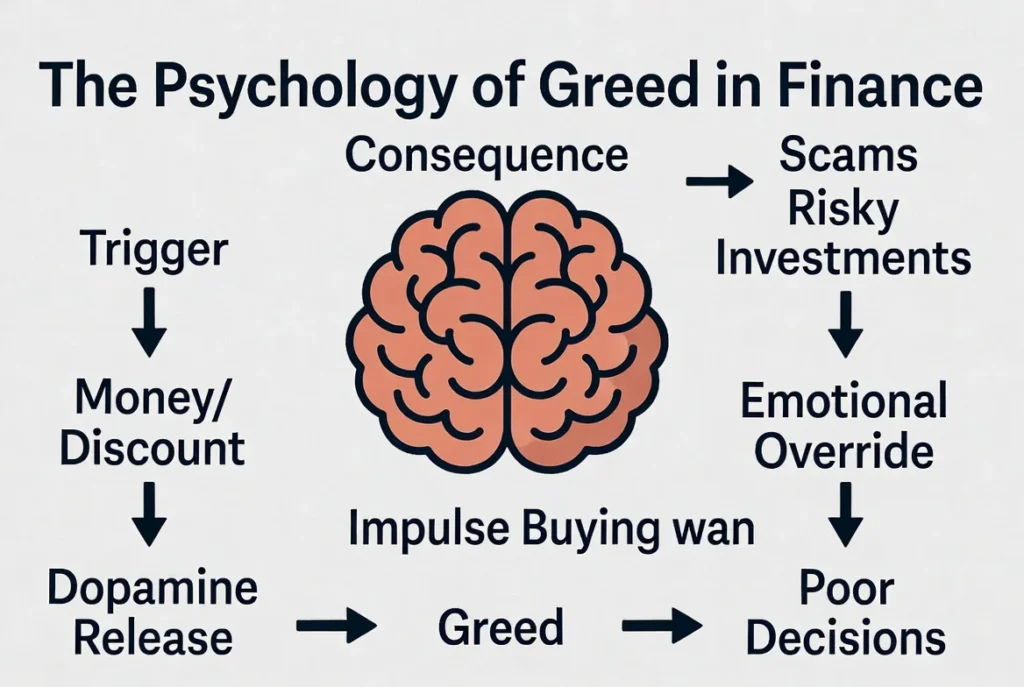
Psychologists explain that greed triggers the brain’s reward system, releasing dopamine: the “feel-good” chemical. This creates excitement and urgency, which clouds rational thinking. As a result, people ignore risks and make decisions based purely on emotion.
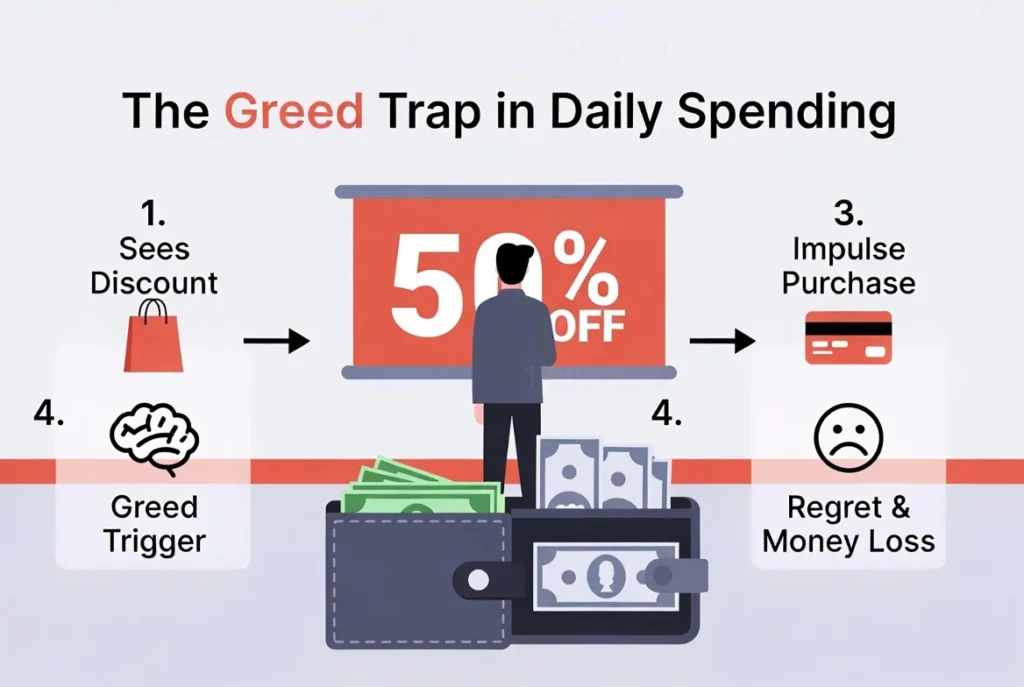
A simple real-life example is the classic discount trap. You see a “Flat 50% Off” banner. Even if you don’t need the item and weren’t planning to buy anything, greed kicks in. You convince yourself you’re “saving money.” In reality, you end up spending money you didn’t intend to spend. This is how marketers cleverly exploit human greed every single day.
How Greed Manipulates Financial Decisions
Greed significantly weakens emotional intelligence: the ability to manage emotions and make rational choices. When greed takes control, analytical thinking shuts down.
This emotional hijacking explains why so many people fall for:
- Impulse buying and unnecessary loans
- High-risk investments based on rumors
- Fake “guaranteed return” schemes
- Credit card debt traps
The famous quote perfectly captures this danger:
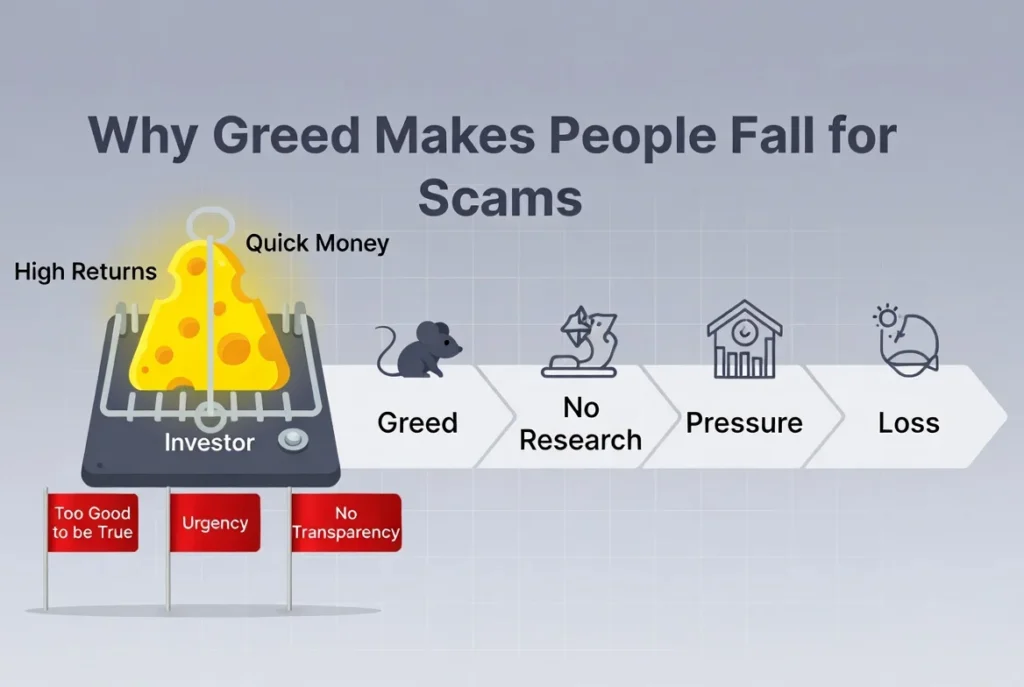
“The mouse always gets trapped because it doesn’t think why the cheese is free.”
Throughout history, the biggest financial disasters have occurred when large groups of people allowed greed to override common sense.
Greed and Financial Scams: A Deadly Combination
Scammers are experts at weaponizing greed. They design schemes that appeal directly to people’s desire for fast, easy money. They create urgency (“Limited time offer!”), promise unrealistic profits, and pressure victims to act immediately.
Major Red Flags of Greed-Driven Scams
Here are the most common warning signs:
- Unrealistically High Returns: Promises of 30%, 50%, or even 100% returns with “zero risk.”
- High-Pressure Tactics: “Act now or miss this opportunity forever.”
- Lack of Transparency: Refusal to answer detailed questions or provide proper documentation.
- Shady Payment Methods: Requests for cryptocurrency, wire transfers, or untraceable methods.
- Emotional Manipulation: Stories of others who “already made millions” (social proof).
Real-world examples include Ponzi schemes, fake investment apps, pump-and-dump crypto projects, and fraudulent property schemes that have destroyed millions of people’s savings worldwide.
How to Protect Yourself from Greed-Based Traps
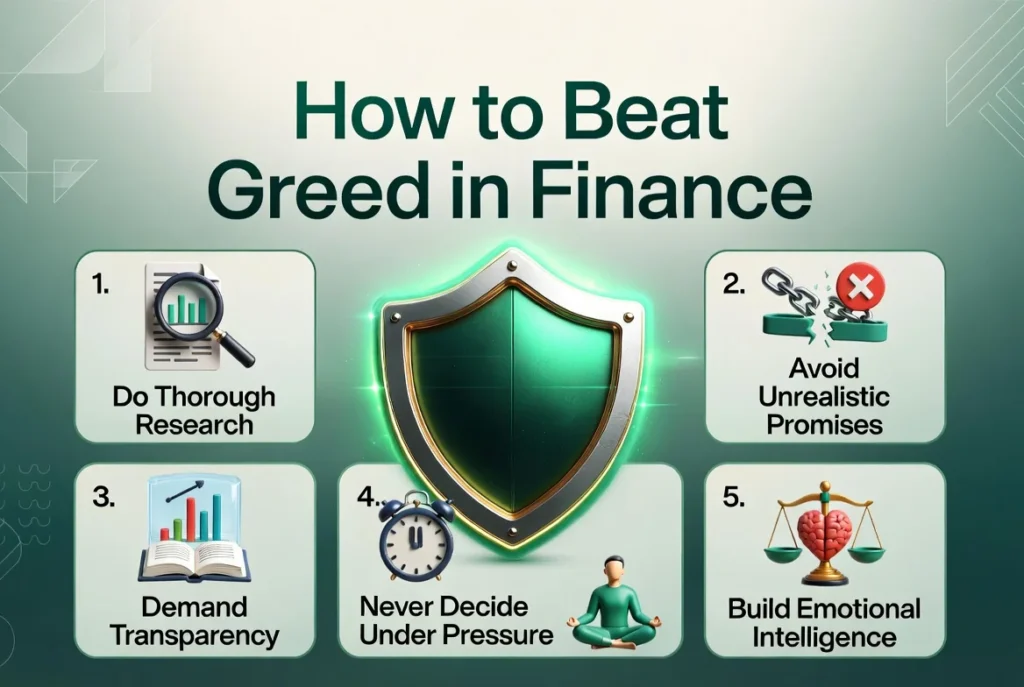
The best defense against greed is financial literacy and disciplined decision-making. Here are proven strategies:
1. Always Conduct Thorough Research
Never invest or spend based on emotions. Use credible sources, read independent reviews, and verify claims before making any commitment.
2. Question Unrealistic Promises
If an offer sounds too good to be true, it almost always is. Compare expected returns with normal market rates.
3. Demand Full Transparency
Legitimate opportunities welcome questions. If someone avoids transparency or gets defensive, walk away.
4. Avoid Pressure Tactics
Take time to think. Any genuine opportunity will still be available after proper analysis.
5. Develop Strong Emotional Intelligence
Train yourself to pause when you feel strong excitement or fear of missing out (FOMO). Ask yourself: “Am I making this decision based on logic or emotion?”
The Devastating Impact of Greed on Personal Life
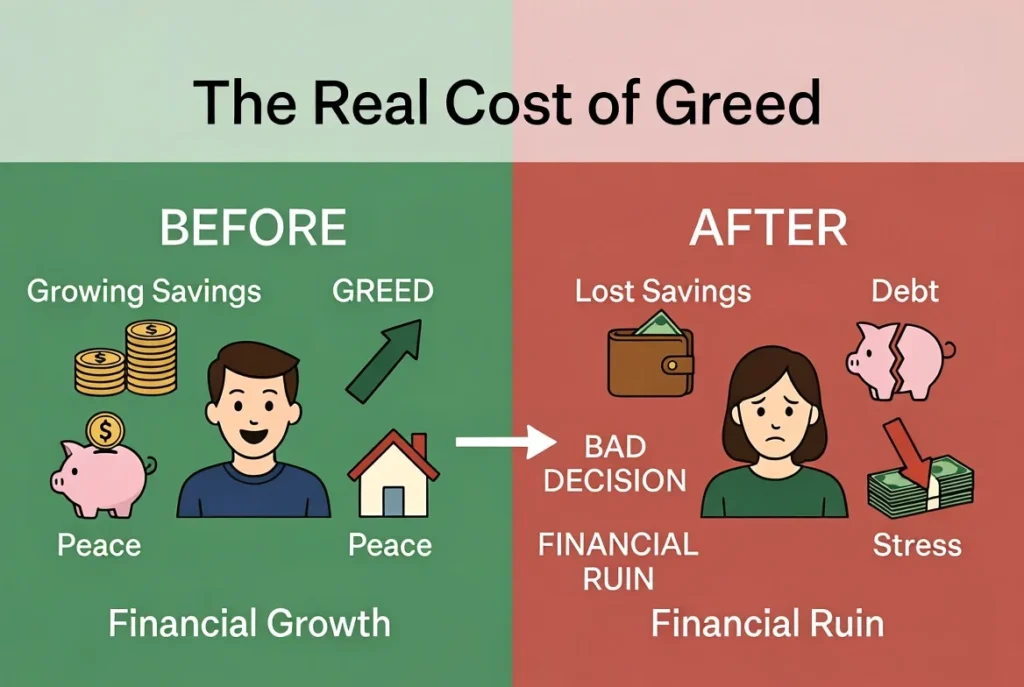
Greed doesn’t just cause financial loss; it destroys lives. People lose life savings, damage relationships, suffer from stress and depression, and sometimes even face legal consequences.
The stock market offers countless examples. During market bubbles, speculators spread rumors of massive gains. Greedy investors jump in without research. When the bubble eventually bursts, thousands lose everything in days.
Similar patterns repeat in every major scam and market crash in history. The cycle is always the same:
Greed → Excitement → Bad Decision → Regret → Financial Ruin.
Conclusion: Take Control of Your Money and Emotions
Greed is a natural human emotion that every person experiences at some point in life, but it doesn’t have to control your financial future. The most successful people are not those who chase every shiny opportunity that appears in front of them. Instead, they are the ones who learn to master their emotions, pause before making decisions, and choose calculated, well-researched actions over impulsive ones.
When you let greed drive your money decisions, you often end up buying things you don’t need, investing in opportunities you don’t understand, or taking unnecessary risks that can wipe out years of hard-earned savings. The temporary excitement of a “deal” or a “quick win” is rarely worth the long-term regret and financial damage it can cause.
The real path to financial freedom lies in self-awareness and discipline. By recognizing the moments when greed is influencing your choices, you gain the power to stop, evaluate the situation carefully, and make decisions based on logic rather than emotion. Over time, this habit of emotional control becomes one of the strongest tools for protecting and growing your wealth.
Remember: True financial success is not about how fast you can get rich, it is about how wisely and consistently you manage what you already have. When you take control of greed instead of letting it control you, you build a foundation of stability, confidence, and long-term prosperity that no temporary temptation can destroy.