Have you ever had a brilliant idea for a product or service, but struggled to actually sell it?
You’re not alone. Most people think entrepreneurship is all about having a great idea or spotting a market gap. But the truth is, the real game begins when you have to convince someone to buy what you’re offering.
Selling is the #1 skill that separates dreamers from successful entrepreneurs. Whether you’re selling a product, a service, an idea, or even yourself in a job interview, mastering sales can change your life. In this guide, we’ll break down the exact steps to become proficient in selling, in a practical, relatable way that you can start using today.
Why Selling Is the Most Important Skill for Entrepreneurs
Finding a good idea is just the first step. Turning that idea into money requires selling.
A great product or service doesn’t sell itself. You have to connect with the customer, understand their needs, build trust, and make them feel confident about buying from you.
What Pink actually means: Selling is not just a business skill, it is a fundamental human skill. Every day we “sell” our ideas, opinions, and requests to others (convincing your spouse to try a new restaurant, negotiating with your boss for a raise, or persuading your kids to do homework). Understanding this makes selling feel less manipulative and more like a natural part of life.
Research by the Harvard Business Review also shows that top performers in sales are not just good talkers, they are excellent listeners who understand customer psychology deeply.
1. Detect the Real Need (Don’t Sell the Pen, Sell the Solution)
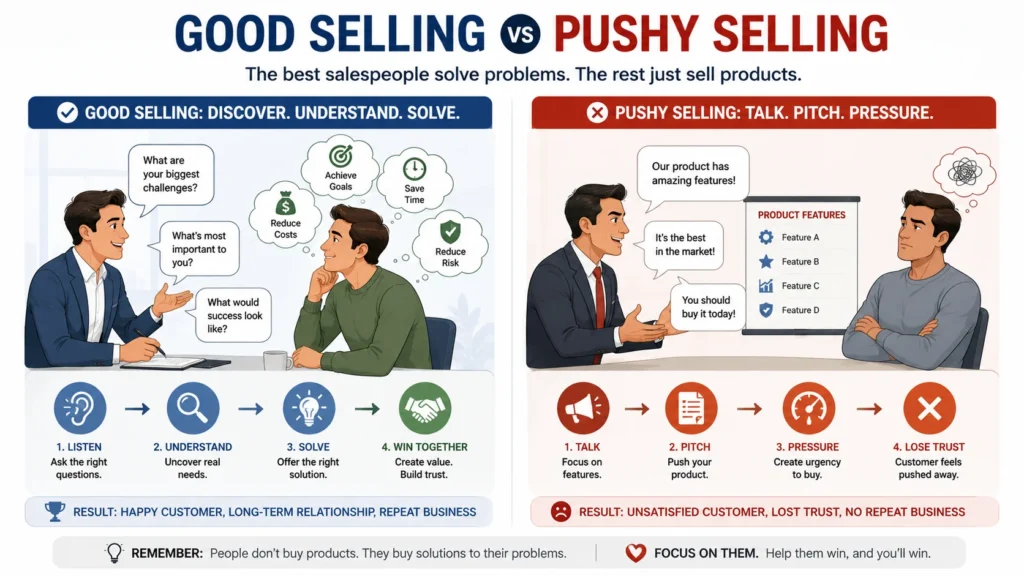
The biggest mistake most beginners make is jumping straight into talking about features.
Real-Life Example: When a customer says “Sell me this pen,” most people start listing features: “It has a smooth tip, it writes in blue ink…” But a skilled salesperson asks first: “Do you even need a pen right now? What are you writing?”
This approach is backed by research. In SPIN Selling by Neil Rackham, one of the most cited sales research studies, the author analyzed thousands of sales calls and found that successful salespeople spend more time asking questions to uncover needs rather than pushing features.
What Rackham’s research means: Traditional selling (pushing features) works less and less in today’s world. Modern buyers are well-informed. The most effective way to sell is to understand the customer’s situation, problems, and goals first.
Practical Tip: Ask questions like:
- “What problem are you trying to solve?”
- “What’s been frustrating you lately?”
- “What would make this purchase worth it for you?”
When you detect the real need, your pitch becomes relevant and powerful.
2. Sell the Emotions, Not Just the Product
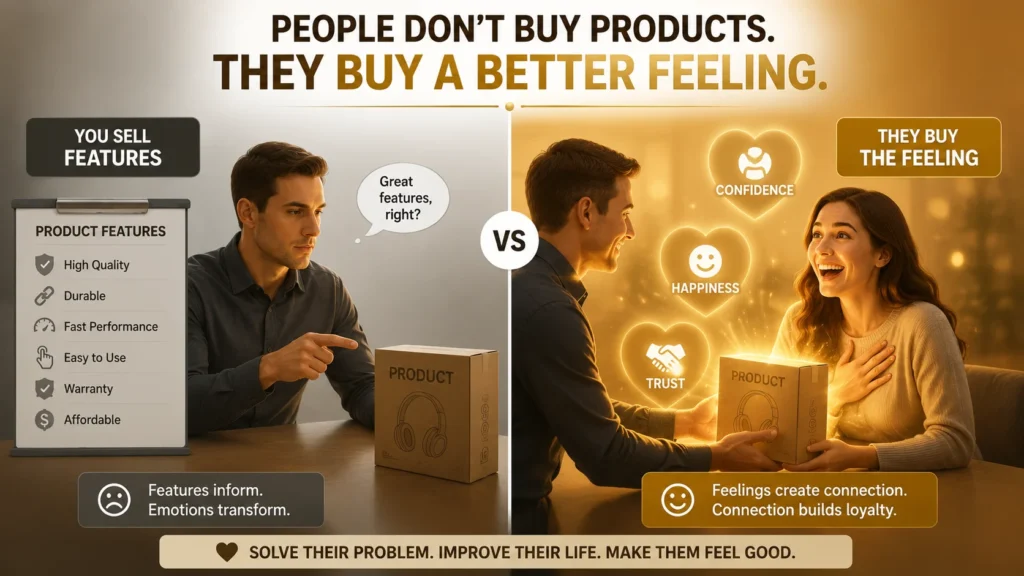
People don’t buy products; they buy the feelings those products give them.
Research & Quote: As Robert Cialdini explains in his influential book Influence: The Psychology of Persuasion, people are strongly driven by emotions and the desire to feel certain ways (confident, secure, respected, happy).
What Cialdini means: Features can be copied by competitors. Emotions create loyalty. When customers feel understood and excited, they buy from you, even if someone else offers a lower price.
Real-Life Example: A luxury watch isn’t just a timepiece. It makes the buyer feel successful, confident, and respected. A good salesperson doesn’t just talk about the watch’s features; they talk about how it will make the customer feel when they wear it.
Practical Tip: Instead of saying “This phone has a great camera,” say “Imagine capturing every special moment with crystal-clear photos that you’ll cherish forever.”
3. Offer the Right Bait (Build Trust First)
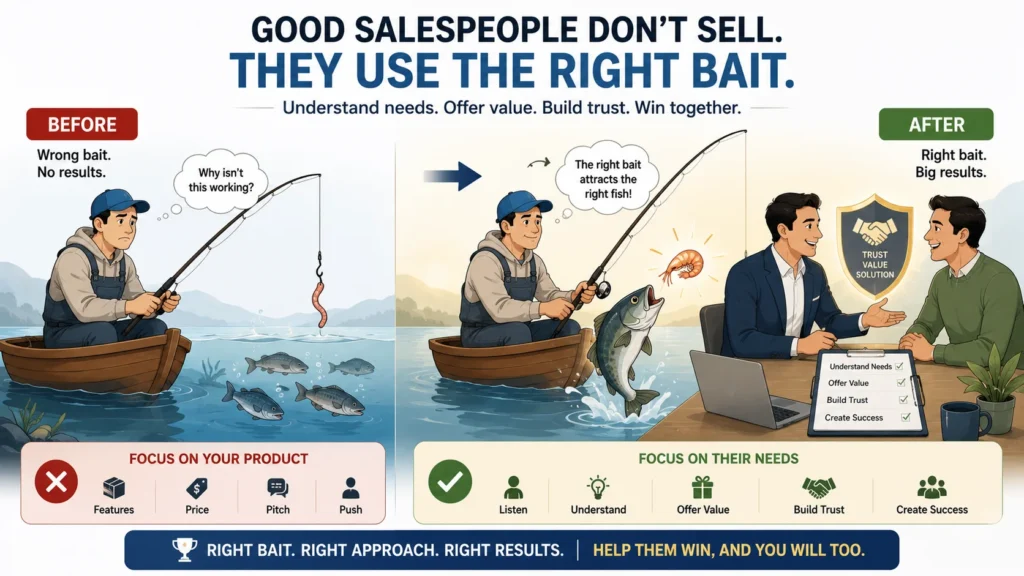
Great salespeople don’t push. They attract.
Research & Quote: Daniel Pink in To Sell Is Human emphasizes that modern selling is about problem-solving and building relationships rather than traditional “closing techniques.”
What Pink means: In today’s transparent world, aggressive selling turns people off. The most effective salespeople act as trusted advisors who help customers make the right decision for themselves.
Real-Life Example: Think of a fisherman. He doesn’t catch fish with chocolate; he uses shrimp because that’s what fish actually want. Similarly, you need to offer customers what they truly value, whether it’s convenience, trust, quality, or expert advice.
Practical Tip:
- Listen more than you talk.
- Give genuine advice even if they don’t buy immediately.
- Focus on building a long-term relationship instead of making a quick sale.
When trust is built, customers will come to you for recommendations and stay loyal for years.
Conclusion: Selling Is About Relationships, Not Transactions
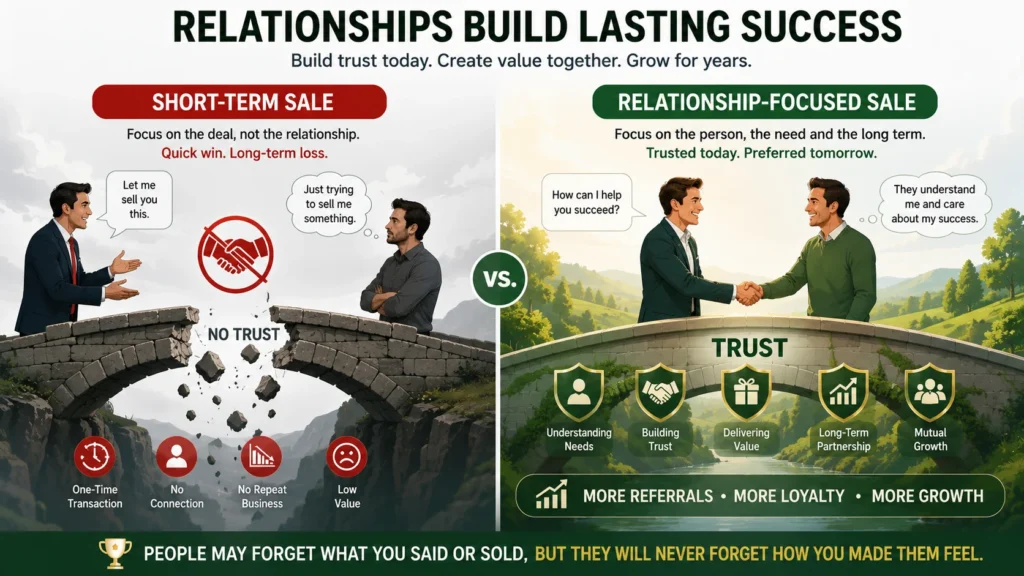
To become a master salesperson, shift your focus from “closing the deal” to “building lasting relationships.”
The short-term approach might bring quick profits, but the long-term approach creates sustainable success. When you truly understand your customers’ needs and emotions, they will trust you, buy from you repeatedly, and even refer others to you.
Start practicing these principles today, in your business, your job, or even in everyday conversations. The more you practice, the better you’ll get.
Because once you master selling, you can sell anything: ideas, products, services, or yourself, because you’ll know exactly who to sell to, when to sell, and how to connect.