Monetary policy explained in simple terms: Have you ever wondered why your home loan EMI suddenly increases without any warning? Why the prices of groceries, fuel, rent, and vegetables keep rising even when your salary stays the same? Or why it becomes so difficult to get a good job or a salary hike during certain periods?
The answer often lies in monetary policy, one of the most powerful but least understood tools used by central banks. Monetary policy decisions made by central banks directly affect your bank account, job security, cost of living, savings, and overall financial future.
Let’s break down monetary policy explained in simple, honest language and see how these central bank decisions impact the daily life of a common person like you and me.
What Is Monetary Policy and Why Should You Care?
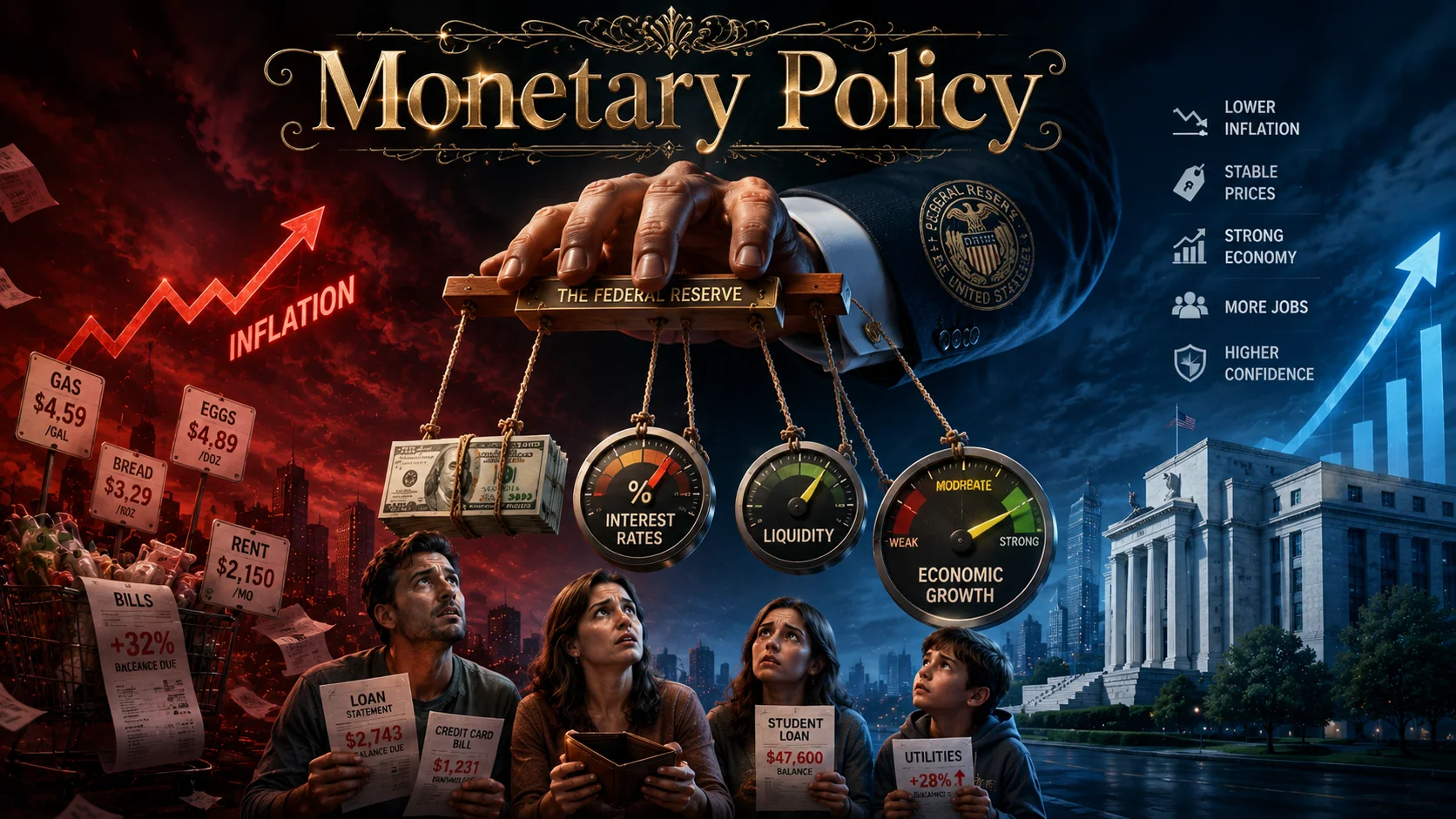
Monetary policy is the strategy used by a country’s central bank to control the amount of money circulating in the economy and the cost of borrowing (interest rates).
Their stated goal is to achieve economic stability, low inflation, good employment, and sustainable growth. However, in practice, these decisions can make your life easier or significantly harder depending on the direction they choose.
Whether you are a salaried employee struggling with monthly expenses, a small business owner trying to grow, or a parent saving for your child’s education, monetary policy is silently working in the background and affecting you every single month.
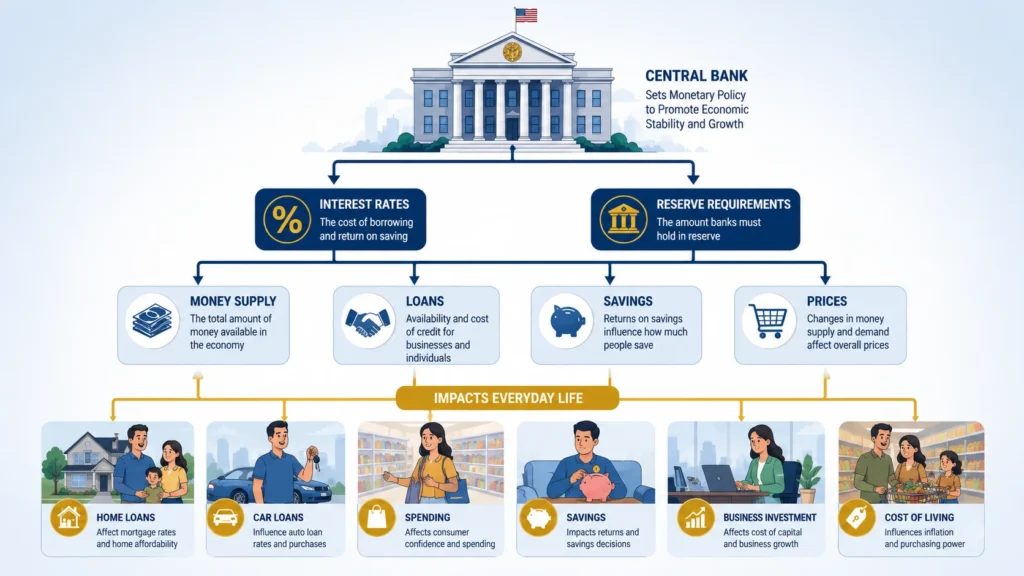
The Two Main Tools Central Banks Use
Central banks mainly control the economy using two powerful weapons:
- Interest Rates (Policy Rate)
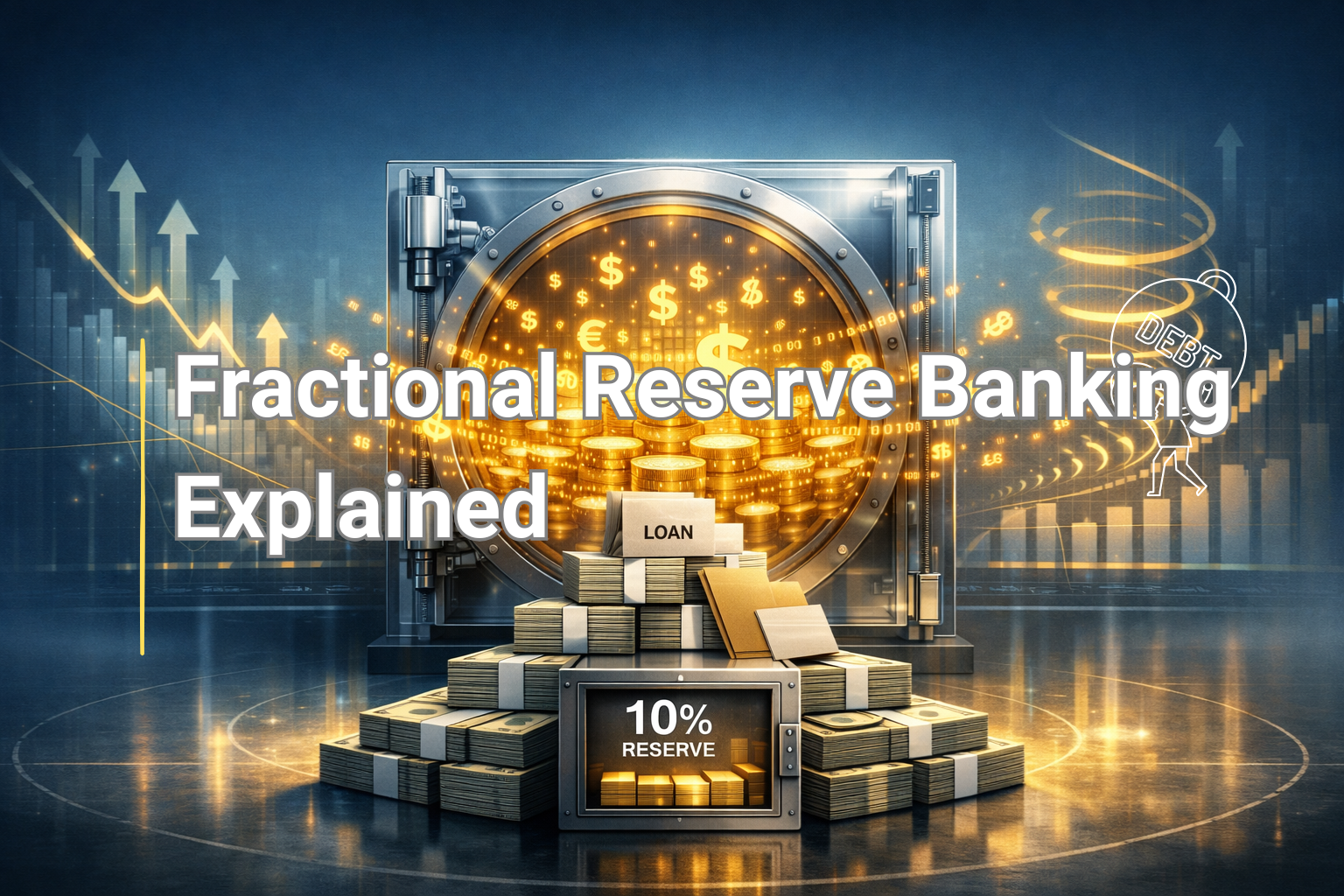
- Reserve Requirements (the percentage of deposits banks must keep with the central bank)
Using these tools, they implement two completely opposite types of policies.
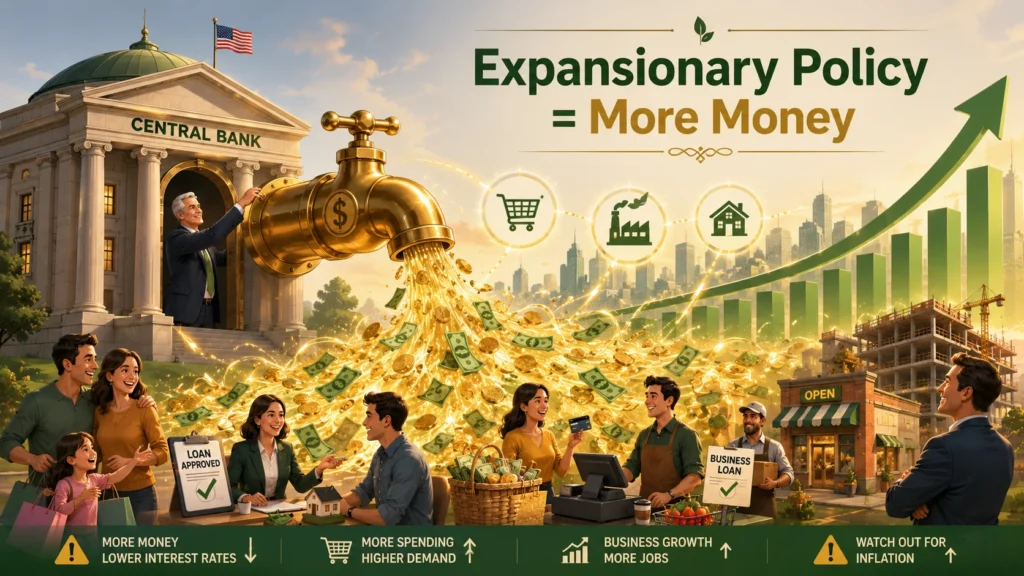
Expansionary Monetary Policy: When They Flood the Economy with Money
When the economy is slow or facing a crisis, central banks use expansionary monetary policy. They lower interest rates and reduce reserve requirements so that banks can lend more freely to people and businesses.
How this directly affects you as a common person:
- Home loans, car loans, and personal loans become cheaper and easier to get.
- Businesses borrow more money to expand operations, which can create more job opportunities in the short term.
- People start spending and investing more because keeping money in the bank gives very low returns.
Real-life example: During the 2020 COVID-19 pandemic, the US Federal Reserve and many other central banks around the world cut interest rates almost to zero and injected huge amounts of money into the economy. This helped prevent a total collapse, but it later contributed to high inflation in many countries.
However, this policy has a dangerous downside.
Why Expansionary Policy Often Hurts Common People the Most
When too much money enters the system, demand increases rapidly while supply often cannot keep up. Companies raise prices because people are willing to pay more. This is called inflation.
You feel the pain every single day when:
- The price of milk, vegetables, cooking oil, and rent goes up
- Your monthly budget falls short even though your salary is the same
- Savings in your bank account lose real value over time
The rich and big corporations usually benefit the most because they get access to cheap loans early. The common man ends up paying higher prices while his income doesn’t grow at the same speed.
Contractionary Monetary Policy: When They Squeeze the Economy
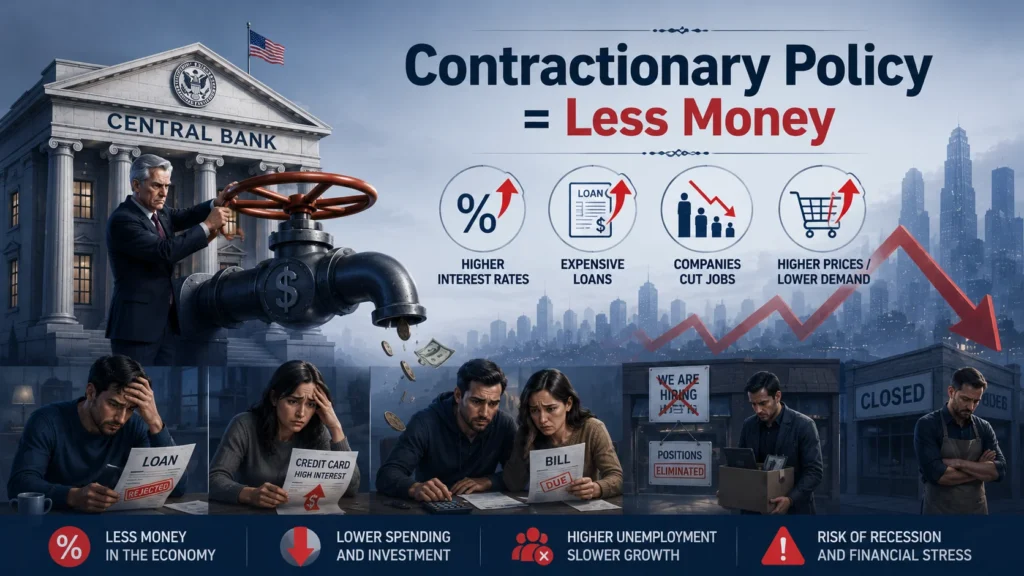
When inflation gets out of control, central banks switch to contractionary monetary policy. They increase interest rates and reserve requirements to reduce the money supply in the market.
How this affects your daily life:
- Your existing loan EMIs become significantly more expensive
- New loans become harder and costlier to get
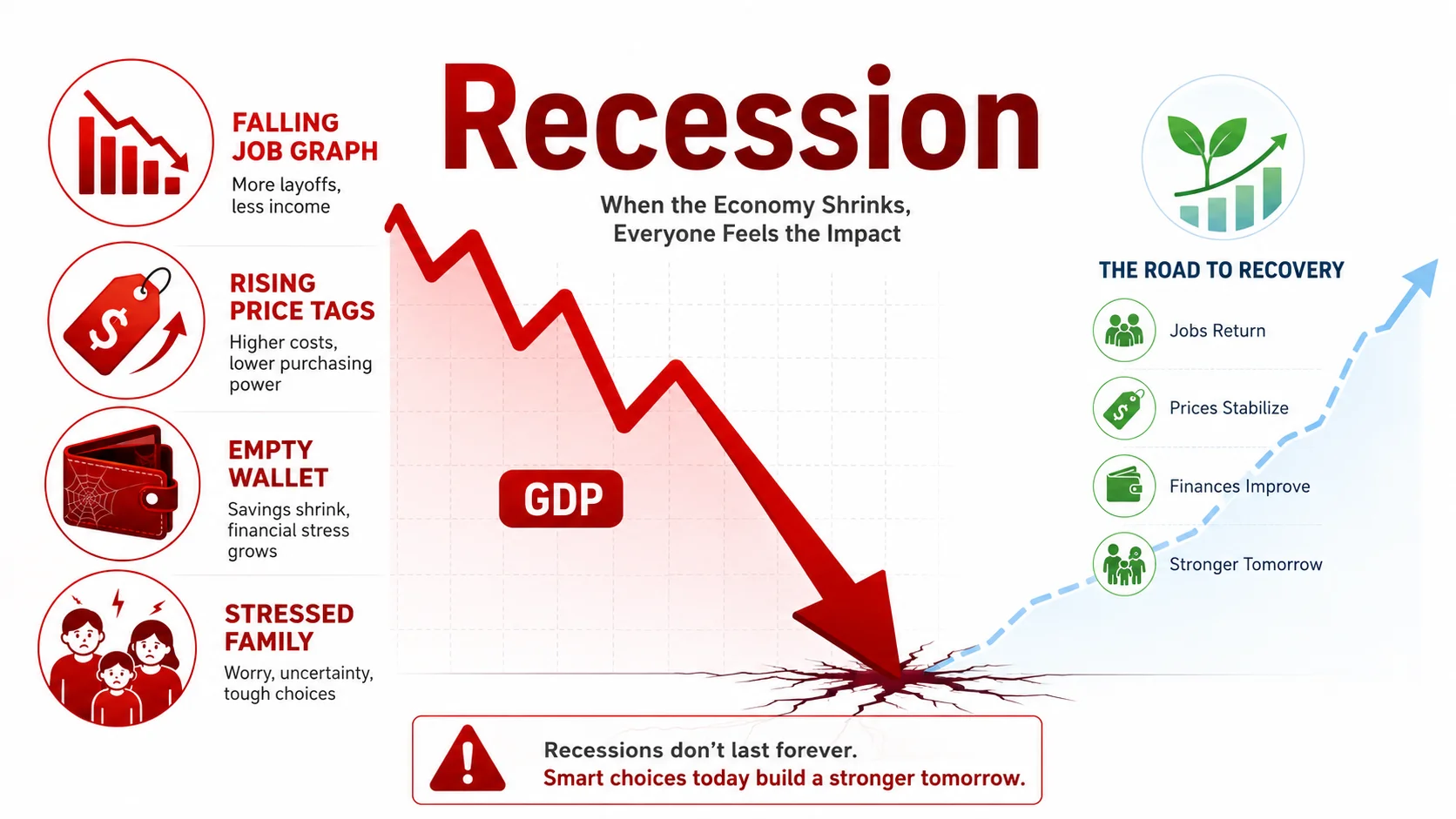
- Businesses reduce spending, delay expansions, and often start laying off employees
- Job opportunities decrease and salary hikes become rare or frozen
This policy is meant to control inflation, but it frequently increases unemployment and puts heavy financial pressure on middle-class and lower-middle-class families.
Real Life Impact on Common People
Let’s make it very personal:
- When interest rates are low, you might finally afford that home or car loan, but later suffer from high inflation that eats away at your savings and increases your cost of living.
- When interest rates are high, your monthly EMI burden suddenly increases, making it difficult to manage household expenses, and companies start cutting jobs, making employment uncertain.
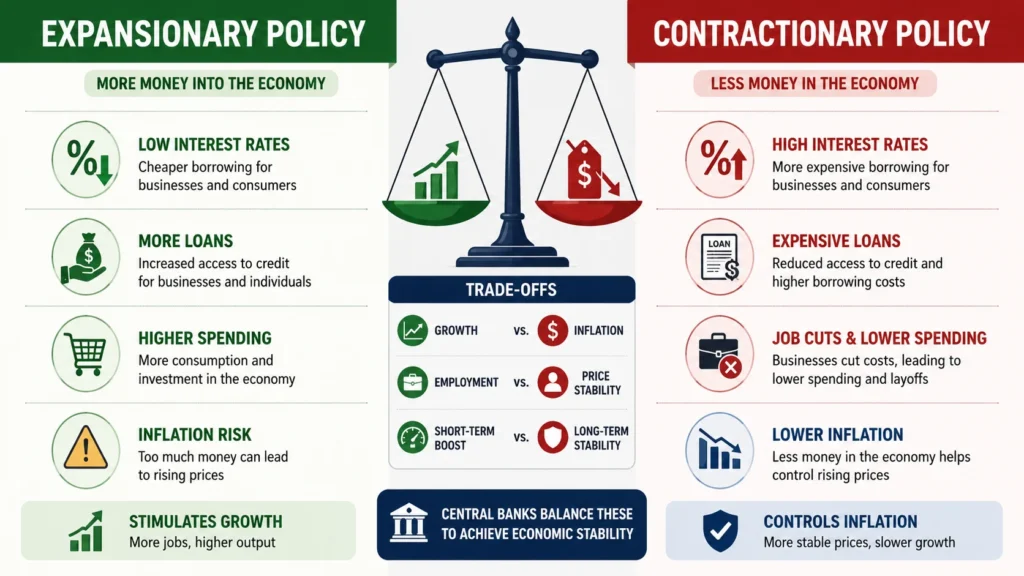
This constant shifting between expansionary and contractionary policies creates uncertainty that affects your long-term planning, whether it’s buying a house, educating your children, or saving for retirement.

Conclusion: Knowledge Is Your Real Power
Central banks hold tremendous power over the economy. With just a few decisions on interest rates and money supply, they can stimulate growth or slow down the entire system. While they intend to maintain balance, the common person often bears the highest cost, whether through rising inflation or increasing unemployment.
The best protection you have is knowledge. Understand how these policies work instead of blindly following them. Build a strong emergency fund, avoid unnecessary debt during uncertain times, keep upgrading your skills, diversify your income sources, and don’t put all your money in one place.
As Warren Buffett famously advised: “Don’t put all your eggs in one basket.” The more you understand how the system works, the better you can protect yourself and your family from its unpredictable side effects. Stay aware, stay prepared, and take control of your financial future