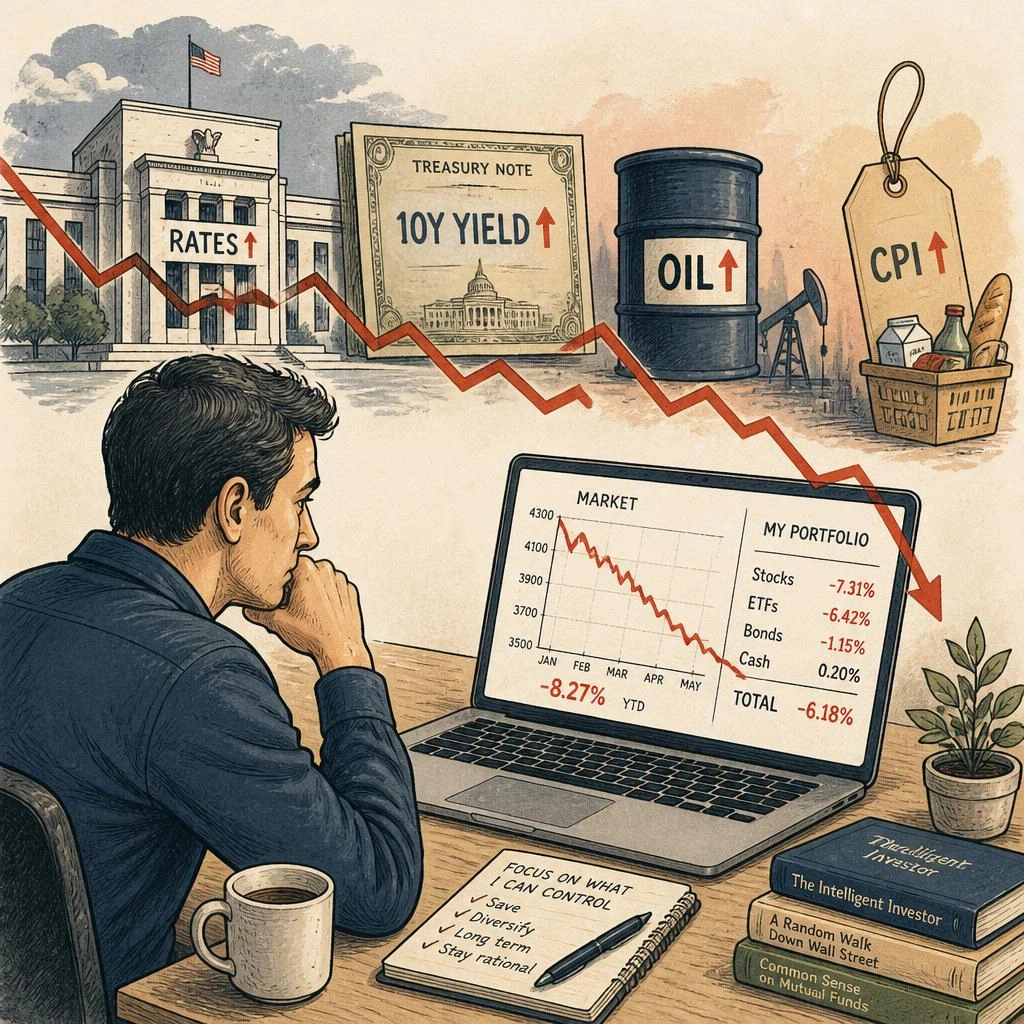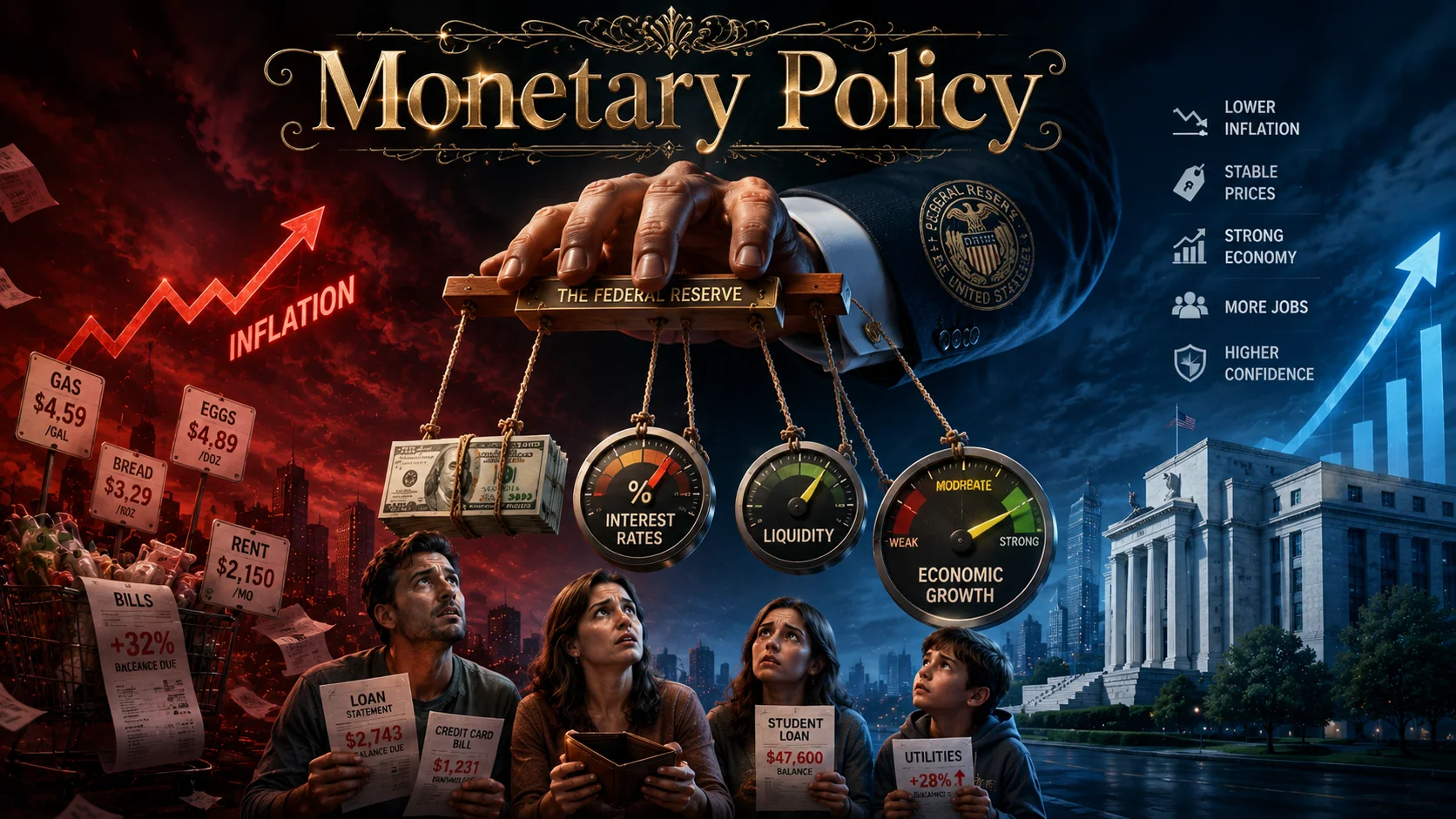
Ever open your grocery bag and feel shocked at the total, for the same items you bought last month? Or glance at your fuel receipt and wonder why filling the tank costs so much more than it did a year ago?
You’re not imagining it. This is inflation, one of the most talked-about, least-understood problems in personal finance. Here’s the plain-English version: what inflation actually is, the 7 real causes behind it, how it quietly drains your paycheck, and what you can actually do about it.
What Is Inflation, Exactly?
Inflation = prices rising over time, while your money buys less.
Simple example:
- Bread cost $3 last year.
- Bread costs $3.15 today.
- That’s about 5% inflation on bread.
Multiply that across thousands of everyday products, and you get the number in the headlines.
A little inflation each year is normal, even healthy, since it’s a sign the economy is growing. The real problem starts when prices climb faster than your paycheck does.
How Is Inflation Actually Measured?
You can’t just “eyeball” rising prices. Governments track it with hard data every single month.
1. The Consumer Price Index (CPI)
This is the number you hear about most, tracked by the U.S. Bureau of Labor Statistics (BLS).
How it works:
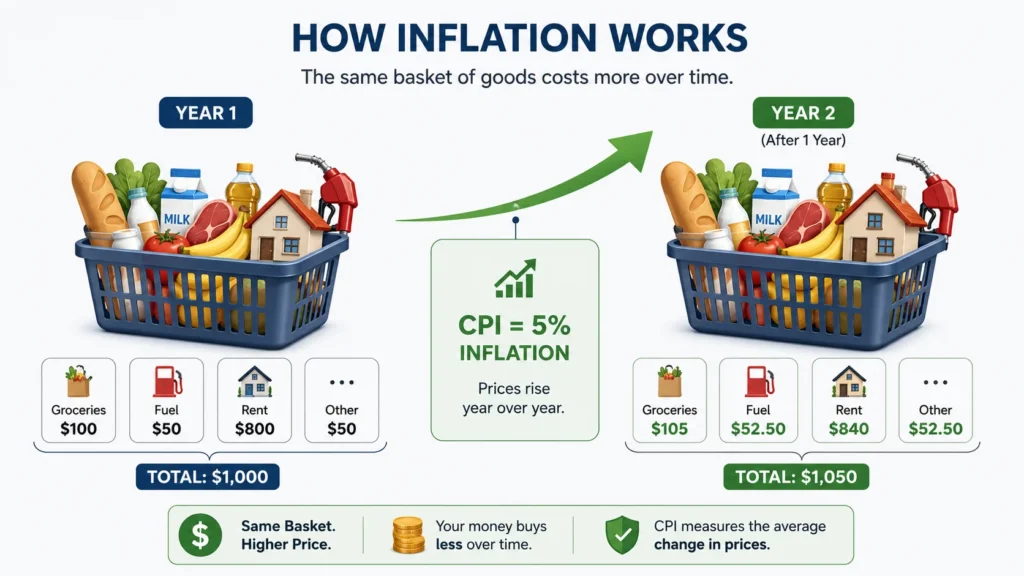
- BLS collects prices on roughly 80,000 everyday items every month.
- Those items go into a “basket”: food, rent, fuel, healthcare, education, clothing.
- They compare this basket’s cost to what it cost a year earlier.
- The percentage change is your inflation rate.
Real examples:
- In 2022, U.S. CPI inflation peaked around 9.1%, the highest in roughly 40 years.
- In June 2026, CPI showed prices up 3.5% year-over-year, even though prices eased slightly that month as energy costs fell.
2. Personal Consumption Expenditures (PCE)
This is the Fed’s preferred gauge. Instead of asking shoppers what they bought (like CPI), it looks at what businesses actually sold.
- CPI = asking shoppers “what did you buy?”
- PCE = asking businesses “what did you sell?”
Two angles on the same problem. Researchers like Annamaria Lusardi, a leading voice in financial literacy studies, have long argued that most people never learn to read either number, which is exactly why inflation feels confusing instead of manageable.
The 7 Real Causes of Inflation
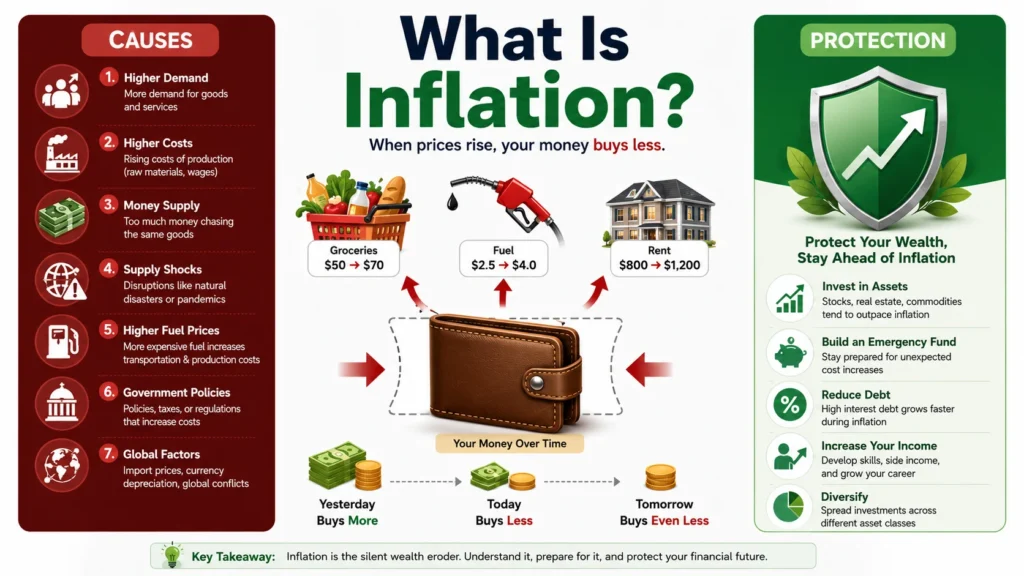
1. Demand-Pull Inflation (Too Much Money, Too Few Goods)
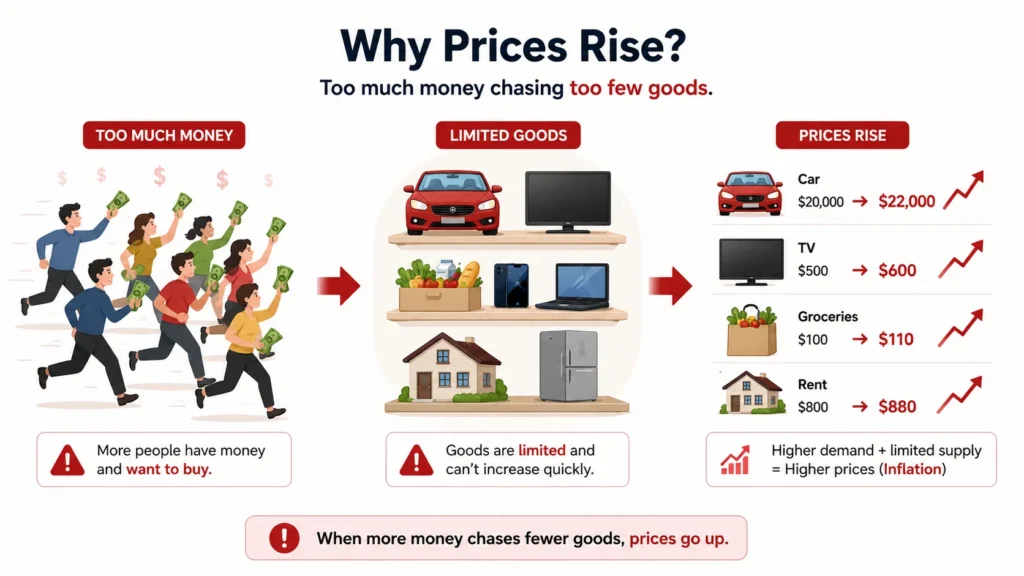
When people have more to spend but supply can’t keep up, prices rise.
Real example: During the 2021–2022 post-COVID recovery, stimulus checks put more cash in people’s hands right as supply chains were still tangled. Demand for cars, electronics, and furniture spiked, used car prices alone jumped sharply in some months, and buying a laptop or fridge suddenly cost noticeably more than pre-pandemic.
2. Currency Devaluation & Excessive Money Printing
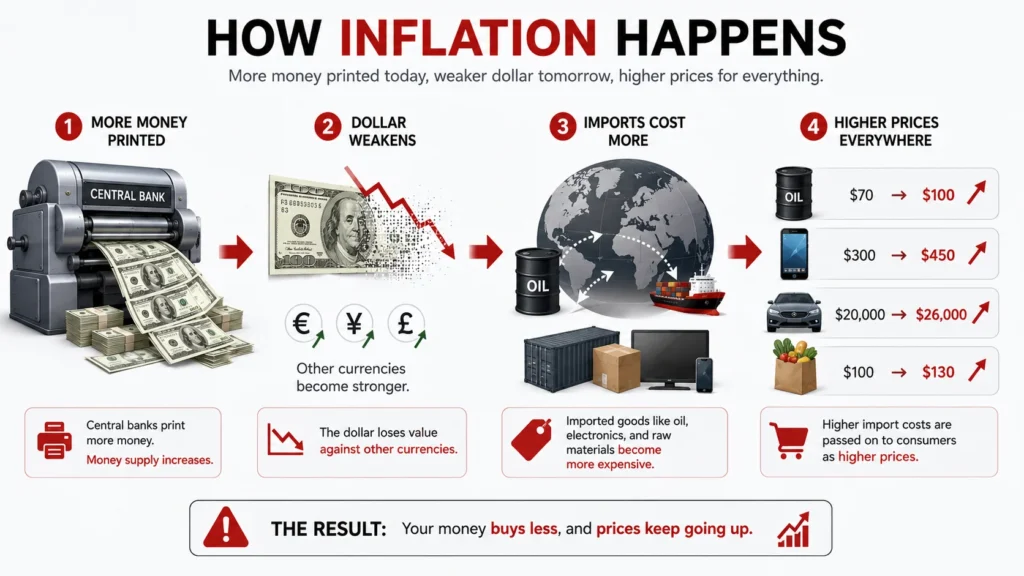
Most global trade runs on U.S. dollars, and most countries hold reserves in dollars too.
The chain reaction:
- A country prints more money, or imports more than it exports.
- Its currency reserves shrink, or the money supply balloons.
- The local currency weakens.
- Imported goods, fuel, electronics, and machinery, are getting more expensive.
- That cost trickles down to everyday prices.
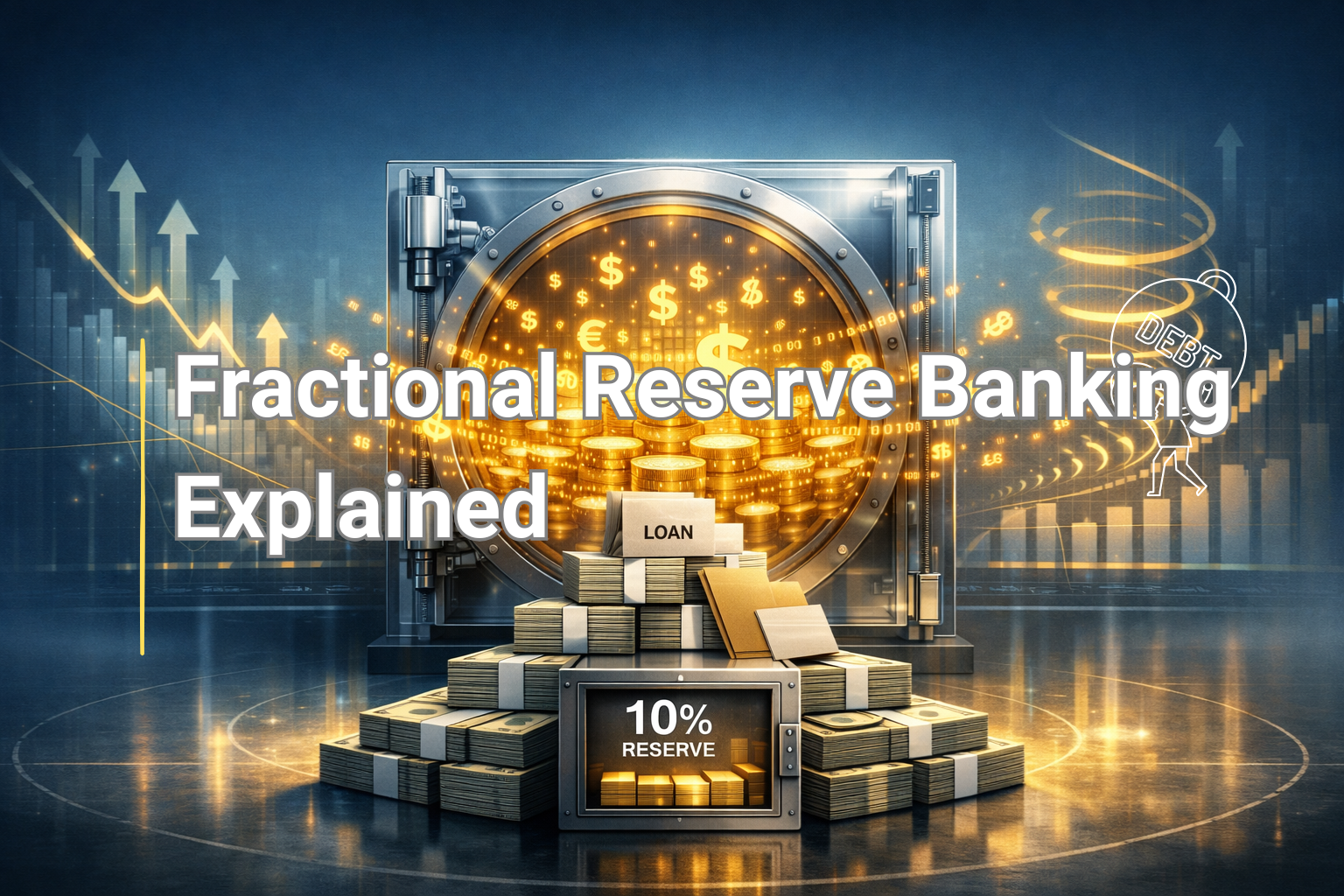
Real example: After 2008 and again during the pandemic, the Federal Reserve expanded the money supply significantly to support the economy. More dollars chasing the same goods put upward pressure on prices, and a weaker dollar made imported goods costlier for American consumers.
Back in 1919, economist John Maynard Keynes warned in The Economic Consequences of the Peace that debasing a currency is one of the quietest ways a government erodes its citizens’ wealth, a warning that still applies to economies like Argentina and Turkey today.
3. Speculative Inflation (Fear & Rumors)
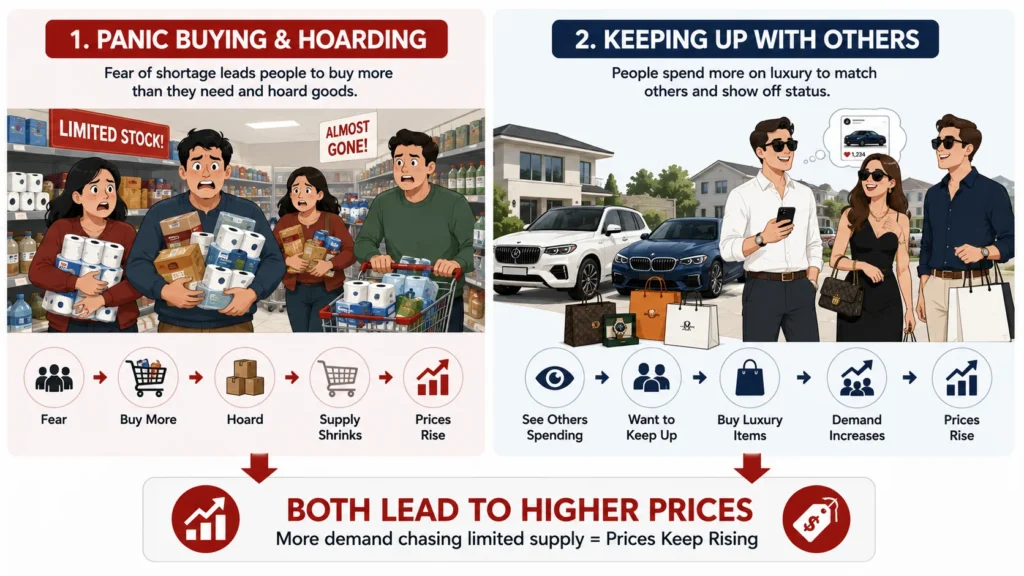
When people expect prices to rise or shortages to hit, they buy now, and that rush of buying makes prices rise faster, even before real scarcity exists.
Real example: Early in the COVID-19 pandemic, rumors of shortages triggered panic-buying of groceries and toilet paper. Shelves emptied and prices temporarily spiked, even in regions where supply was actually fine. The panic created its own scarcity.
4. Lifestyle (Informal) Inflation
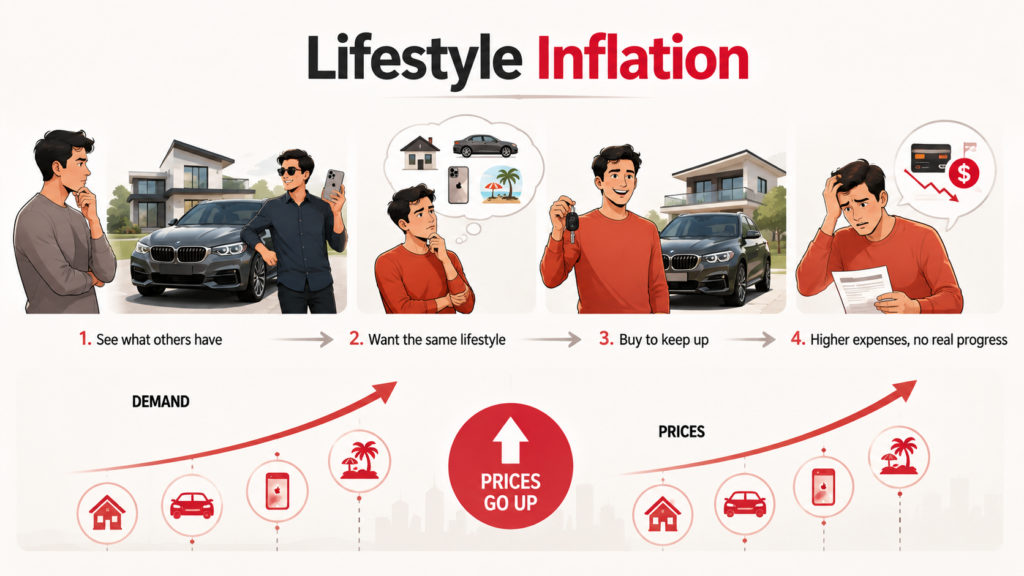
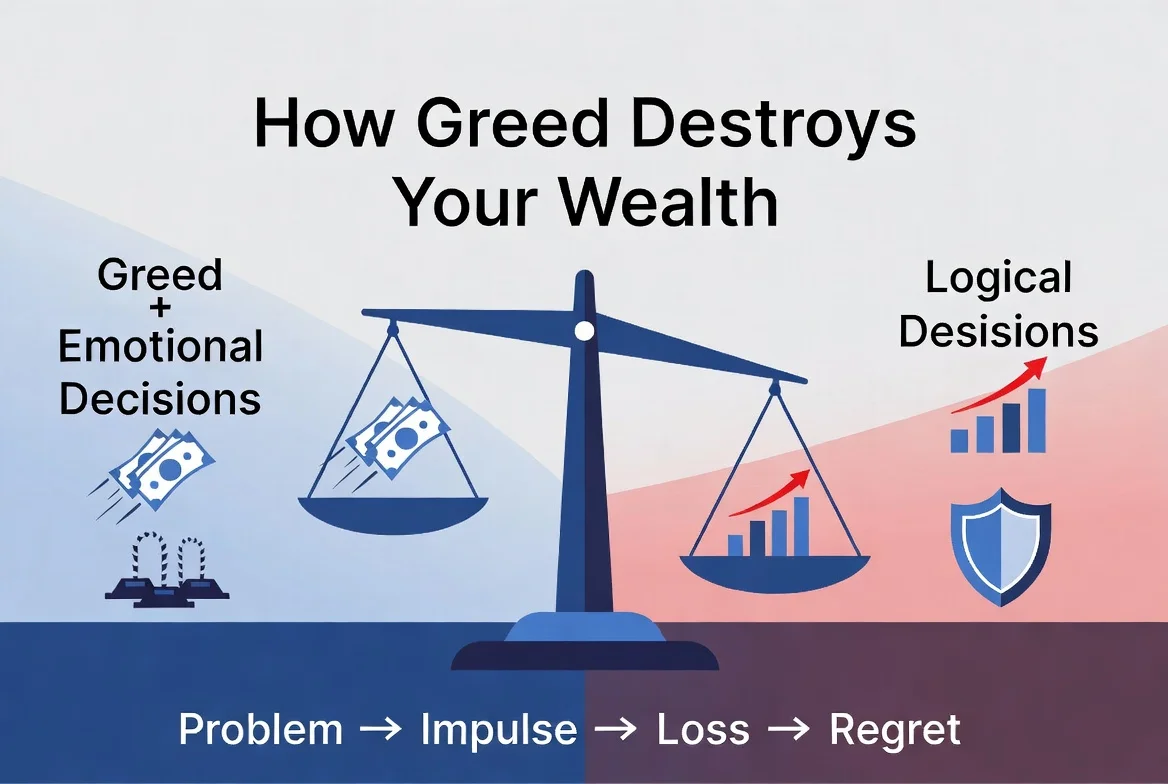
This one rarely gets talked about, but it’s real. When “keeping up with the Joneses” becomes normal, demand for bigger cars, the latest phones, and pricier vacations rises across the board, and companies respond by raising prices.
Robert Kiyosaki touches on a version of this in Rich Dad Poor Dad, the idea that lifestyle creep, not just external economic forces, quietly makes life more expensive for people even as their income grows.
5. Cost-Push Inflation
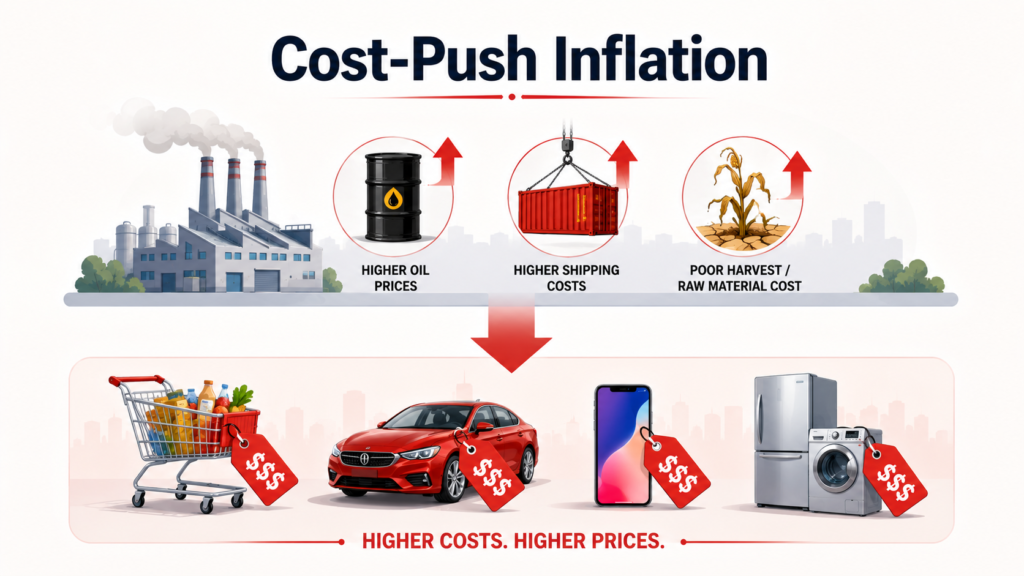
Sometimes it just becomes more expensive to make things, an oil price spike, a shipping bottleneck, a bad harvest. Those extra costs get passed straight down to the consumer.
6. Interest Rate Side Effects
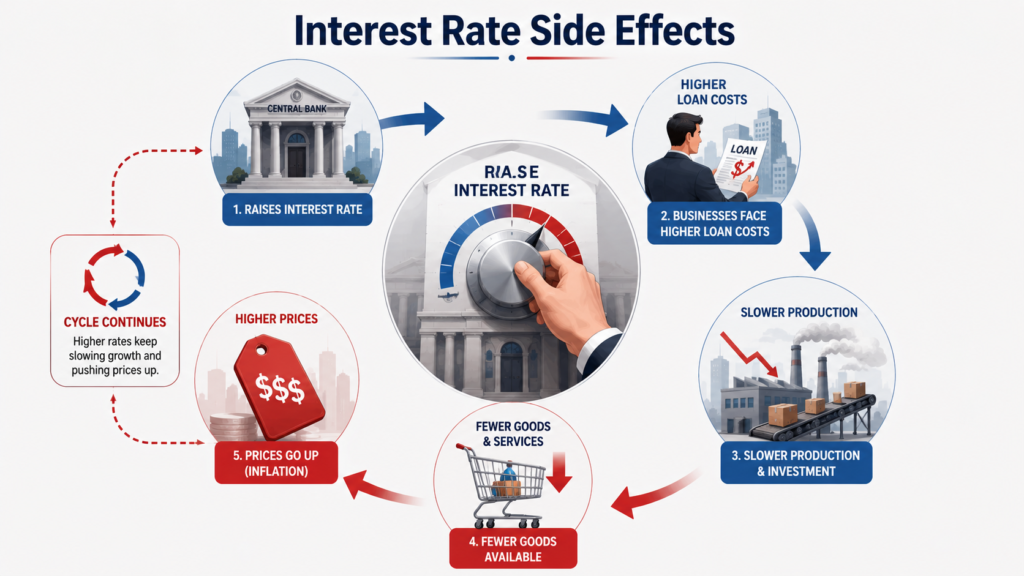
Central banks raise interest rates to fight inflation, but higher rates also raise the cost of doing business. That can slow production, which sometimes worsens the very supply shortages driving prices up in the first place.
7. Wage-Price Spirals
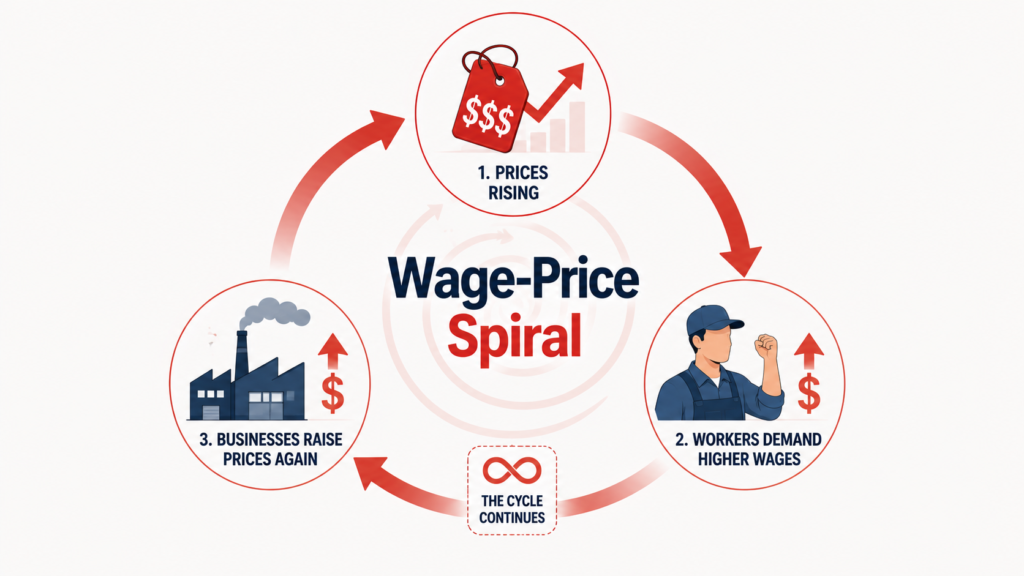
When prices rise, workers push for higher wages to keep up. Businesses then raise prices again to cover the higher wage bill. Round and round it goes, each cycle reinforcing the next.
How Inflation Hits Real People
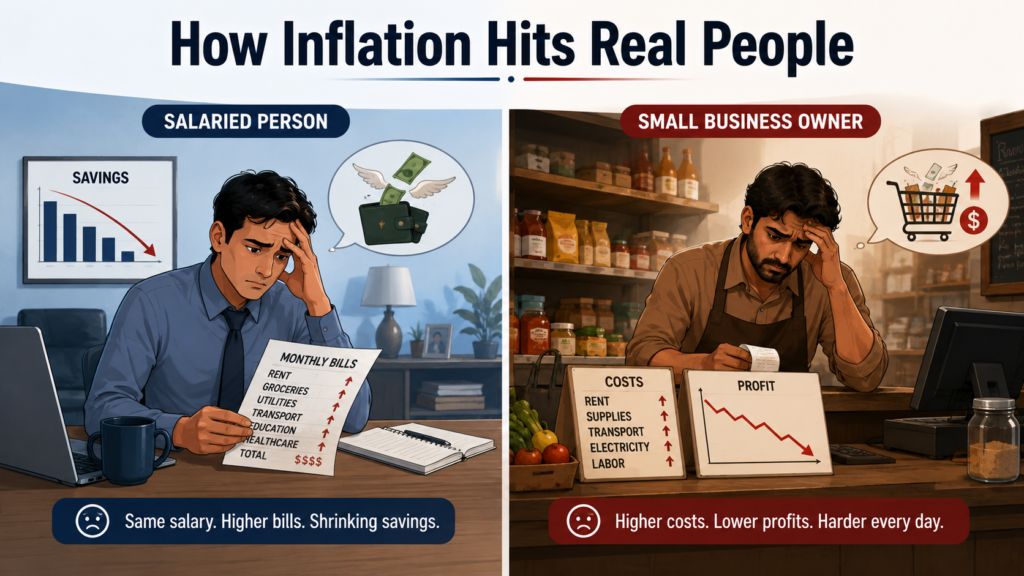
Inflation isn’t an equal-opportunity problem. Here’s what it can look like (illustrative examples, not real named individuals):
A bank clerk in Ohio, earning around $55,000/year, used to save roughly $800/month. Today, the same groceries and school fees cost hundreds more per month; savings have nearly disappeared, and emergencies now mean borrowing.
A small grocery shop owner in Texas: Rent, electricity, and wholesale costs have climbed sharply over two years, but raising prices too much means losing customers to competitors. Profit margins shrink, hours get longer, and staff costs get cut just to stay open.
The pattern across income levels:
- High income: barely notices, adjusts nothing.
- Middle income: cuts back on extras, delays upgrades.
- Low income already spending most of their paycheck on essentials: real hardship risk.
Small businesses face the same squeeze big corporations don’t: thin margins with nowhere to absorb the hit.
How to Protect Your Wallet From Inflation
You can’t control national inflation, but you can control your exposure to it:
- Track your budget monthly: energy and food usually rise faster than the average, so plan around that.
- Invest in assets that historically beat inflation: stocks, real estate, and inflation-protected bonds, rather than leaving large savings sitting entirely in cash.
- Build more than one income stream: so a single paycheck isn’t your only defense.
- Watch interest rate cycles: mortgage, credit card, and loan rates usually rise right alongside the Fed’s inflation fight.
- Avoid unnecessary debt and lifestyle creep: the same “informal inflation” driving prices up can drain your own budget from the inside.
The Bottom Line
Inflation isn’t a mysterious force, it’s the direct result of too much demand, a weakening currency, rising costs, fear-driven buying, lifestyle pressure, and sometimes just a wage-price loop feeding itself.
Once you can trace a price hike back to its real cause, the headlines about CPI reports and Fed meetings stop feeling like noise, and start being information you can actually use.
The best long-term defense isn’t panic, it’s financial literacy: understanding how these forces work and building habits that protect you regardless of which one shows up next.