At a Glance
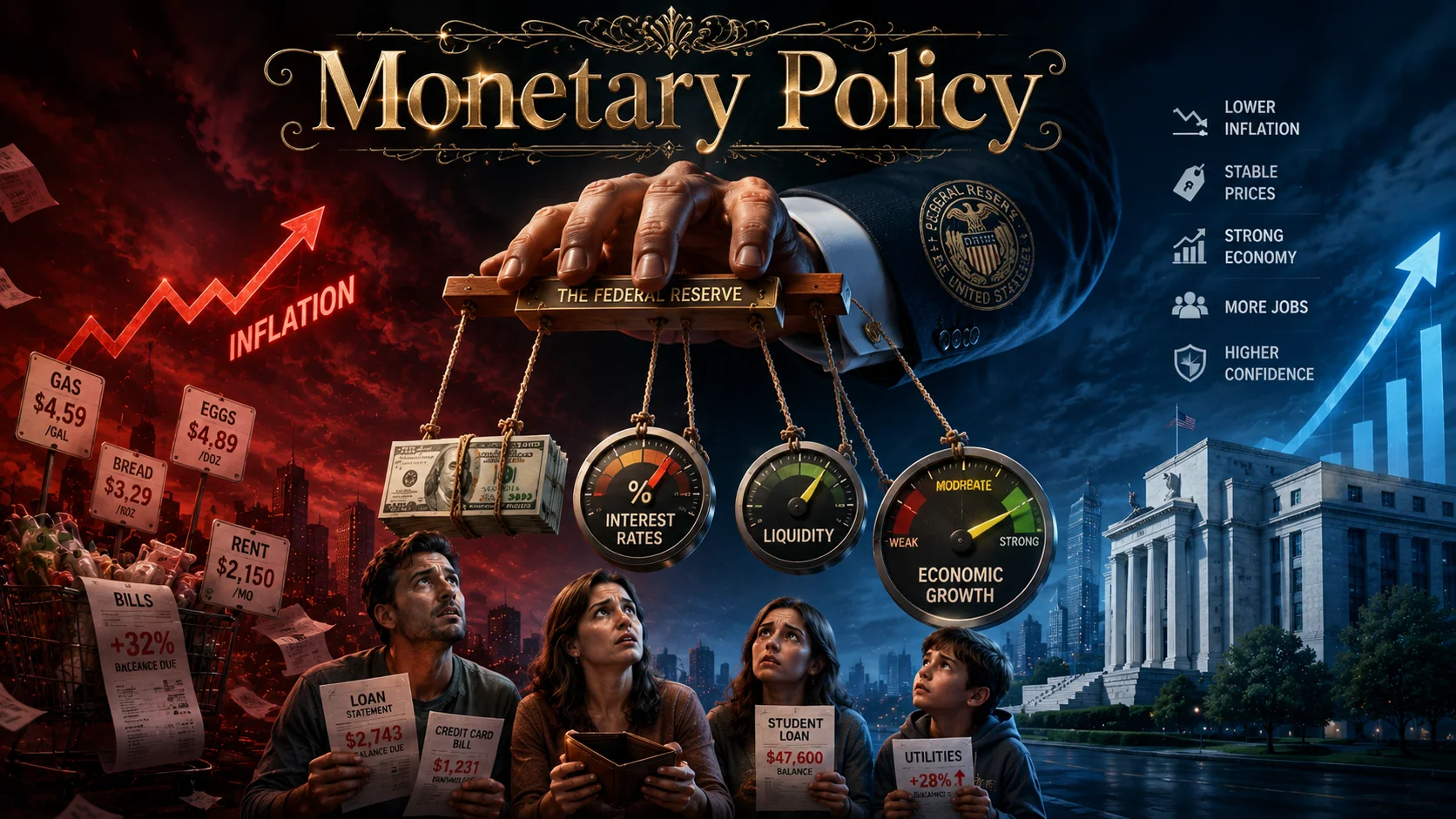
As of September 16, 2026, the Federal Reserve’s target interest-rate range stood at 3.75%–4.00%, U.S. inflation was 3.4% year over year in August, and real GDP grew at a 1.5% annualized rate in Q2 2026. The 10-year U.S. Treasury yield reached 5.01% on September 16, showing why interest rates, inflation, growth, and bond yields have become important drivers of stock-market valuations. So, Let’s discuss Why is the Stock Market falling?
By the end of this article, you’ll know
- Why is the stock market falling?
- How do higher interest rates affect stock prices?
- Why does inflation matter to the stock market?
- Can stocks fall even when the economy is still growing?
- Why do rising oil prices affect stocks?
- Why do rising bond yields put pressure on stocks?
- Why can a good company still have a falling stock price?
- Can investor sentiment make a stock-market decline worse?
- What does a falling stock market mean for my money?
- What should investors watch when the stock market falls?
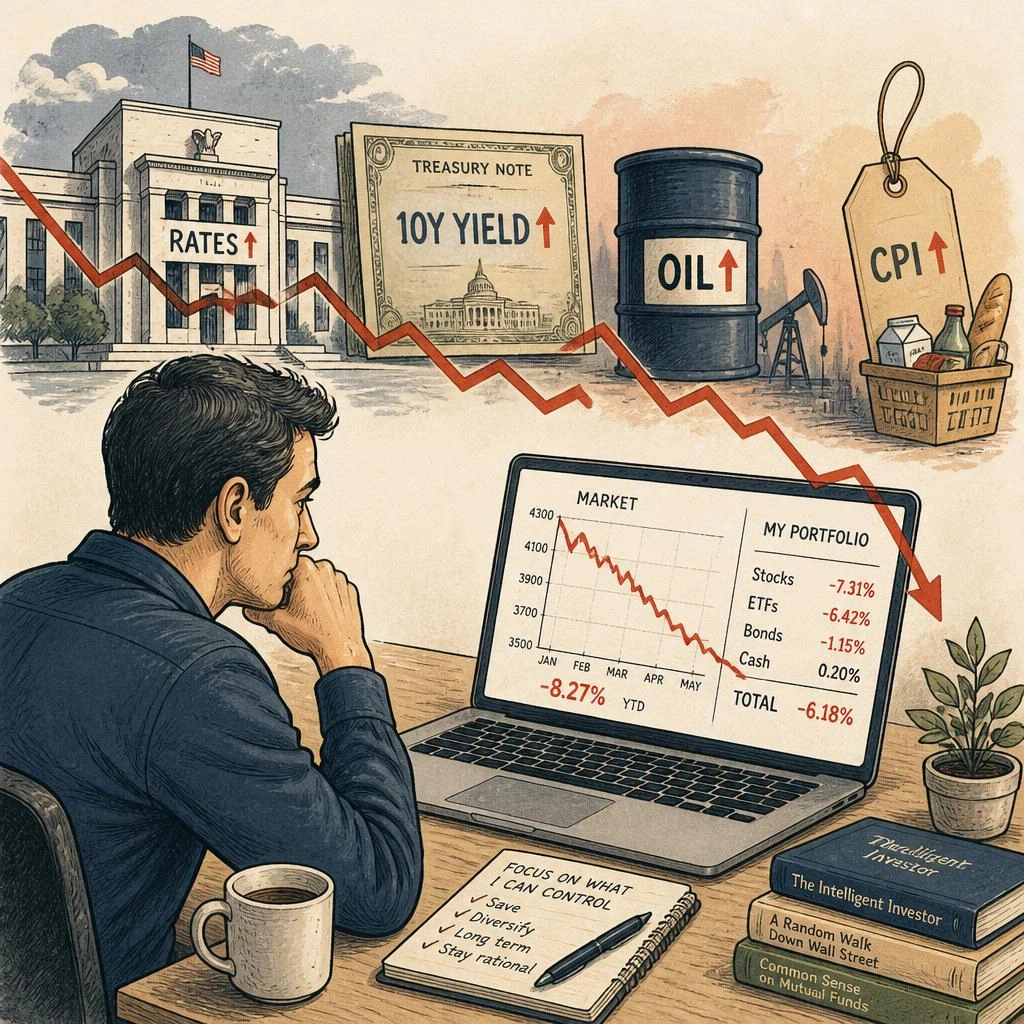
You open your investment app and see the numbers in red. Your stocks are down, the broader market is down, oil prices are climbing, bond yields are rising, and every financial headline points in a different direction. Naturally, one question comes to mind: what is actually happening to my money?
That is a much more useful question than simply asking why the market is down. Markets rarely fall for one reason. More often, several forces begin moving at the same time, and each one affects the next.
Take what happened in September 2026: the Federal Reserve raised its benchmark interest-rate target by a quarter percentage point to 3.75%–4.00%, saying inflation remained elevated. That same day, the Dow fell about 1.21%, the S&P 500 declined roughly 0.45%, and the 10-year Treasury yield reached 5.01%, according to U.S. Treasury data.
At first glance, you might think the explanation is simple: the Fed raised rates, so stocks fell.
It is not that simple.
Underneath that market move were several interconnected forces: inflation, interest rates, economic growth, oil prices, bond yields, stock valuations, and investor psychology. And those forces do not just affect Wall Street. They can eventually reach your portfolio, your savings, your borrowing costs, and your financial plans.
Let’s follow that chain and see why it matters to you.
First, What’s Driving Markets Right Now?
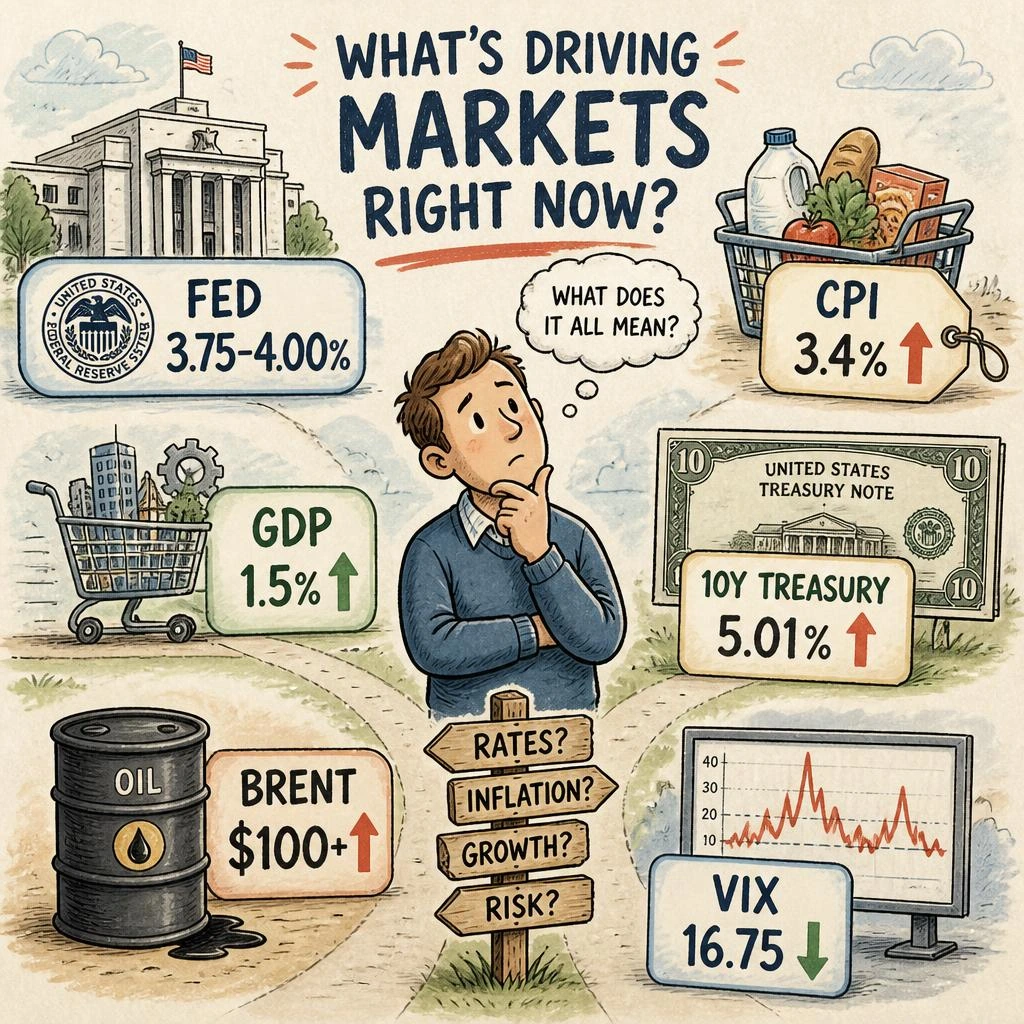
Before looking at the seven reasons individually, it helps to take a quick snapshot of the environment investors are dealing with in September 2026.
According to the latest available U.S. data, the Federal Reserve’s benchmark rate is 3.75%–4.00%, August inflation was 3.4% year over year, second-quarter GDP grew at an annualized 1.5%, the 10-year Treasury yield reached 5.01%, and the VIX stood at 16.75 on September 16. Brent crude had averaged $91 per barrel in August before moving above $100 in September.
None of those figures, by themselves, tell you where the stock market must go next. What matters is how they interact.
That interaction begins with interest rates.
1. Interest Rates Rise – And Suddenly Money Costs More
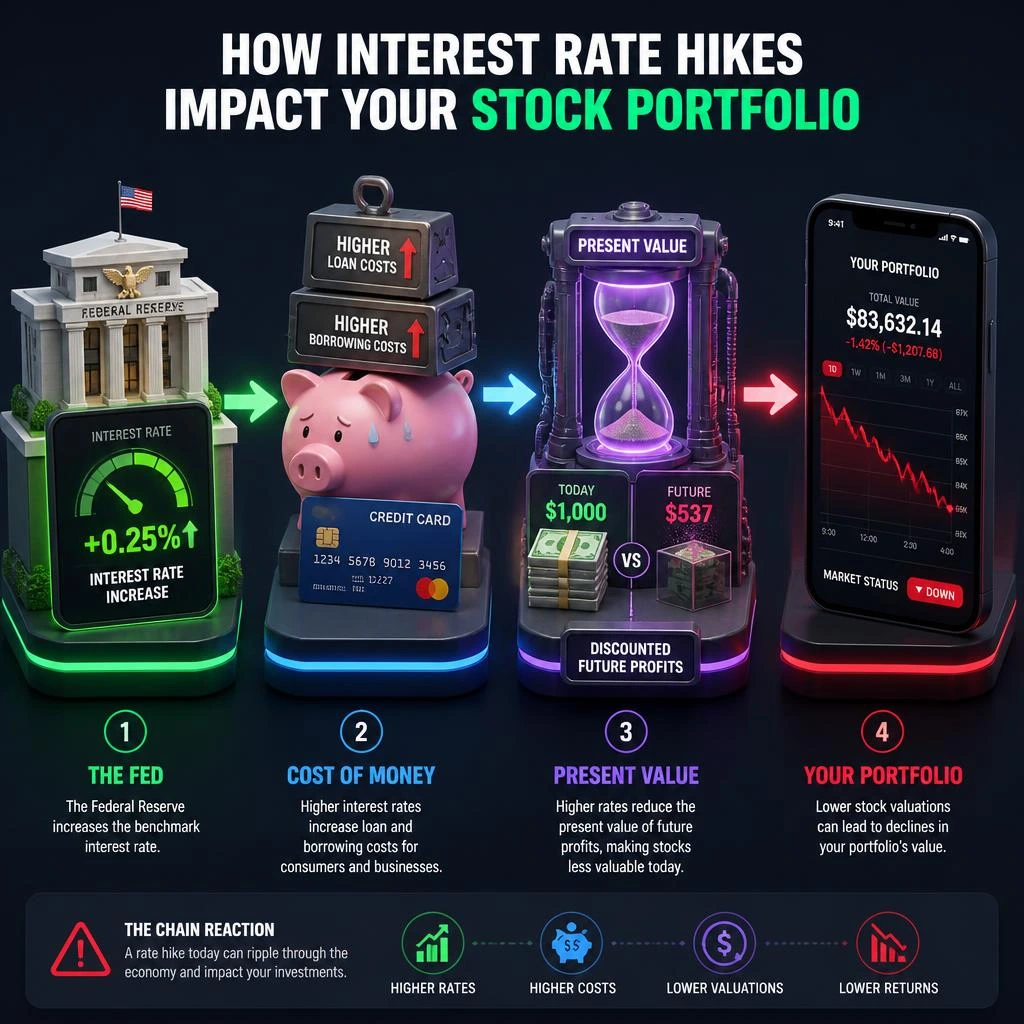
You do not have to be a professional investor to feel the effects of higher interest rates. You may notice them through a mortgage, a business loan, a credit card, the return on your savings, or the value of your investment portfolio.
The Federal Reserve raised its federal funds target range by 0.25 percentage point to 3.75%–4.00%. The Fed said economic activity was expanding at a solid pace but that inflation remained elevated, while reaffirming its 2% inflation goal.
So why can a relatively small change in an interest rate affect stock prices?
One reason is that investors are constantly comparing the value of money today with the value of money they expect to receive in the future.
Suppose a company tells you that it will give you $1,000 five years from now. Would you rather receive that $1,000 today? Probably. Money in your hands today can potentially earn a return while you wait, whereas the future payment cannot be used until later.
That is the basic idea behind present value, a fundamental concept for valuing investments. When the return available elsewhere rises, future cash flows generally become less valuable in today’s terms.
Warren Buffett explained the same underlying principle in Berkshire Hathaway’s 1989 shareholder letter, where he described intrinsic value in terms of future cash flows discounted using prevailing interest rates.
So when rates rise, investors may decide that a company’s future profits are worth somewhat less today.
There is another effect as well. Higher interest rates can make borrowing more expensive. A company that used to finance expansion cheaply may now have to pay more to borrow, while consumers may face higher loan and credit costs.
Why does that matter to you?
Because a stock’s value is based not only on what the company earns today, but also on what investors believe it can earn in the future. The business does not have to suddenly become worse for its share price to fall; investors may simply decide that its future profits are not worth as much as they previously thought.
And that is how a decision made by a central bank can eventually show up as a red number in your portfolio.
2. Inflation Stays High – And Keeps the Pressure on Interest Rates
Now comes the obvious question: why is the Federal Reserve concerned about keeping interest rates high in the first place?
One major reason is inflation.
According to the U.S. Bureau of Labor Statistics’ September 11, 2026 CPI report, consumer prices were 3.4% higher in August than a year earlier. Core inflation, which excludes food and energy, increased 2.4% over the same period, while gasoline prices rose 3.9% during August.
The Federal Reserve’s long-run inflation goal is around 2%, so inflation is still running above the level policymakers want.
Why should that matter to your portfolio?
Imagine inflation remains stubbornly high while the central bank is considering cutting interest rates. Policymakers may worry that easing too quickly could allow inflation to remain elevated. That can make them more cautious about lowering rates.
The result can be a chain reaction: inflation stays high, interest rates remain higher for longer, borrowing stays expensive, and investors become more cautious about valuations.
Inflation also affects companies directly.
Imagine you run a restaurant and the cost of food, electricity, and transportation all rises. You can try to raise prices, but customers may resist. If you absorb the additional costs instead, your profit margin shrinks.
The same basic problem exists across the economy.
A manufacturer may pay more for materials. A delivery company may pay more for fuel. An airline may face higher operating costs. A retailer may spend more getting products to stores.
So, when you hear that inflation is still elevated, it is not merely a story about the cost of groceries. It is also a story about how expensive it is to operate a business, borrow money, and maintain purchasing power.
For investors, that leads to another question:
What will today’s inflation numbers make the central bank do next?
That question can move markets just as much as the inflation number itself.
3. The Economy Is Still Growing – So Why Can Stocks Still Fall?
This is one of the most confusing things for investors.
You hear that the economy is growing, yet your portfolio is falling. How can both be true?
The answer is that stock markets care about expectations, not just what is happening right now.
The Bureau of Economic Analysis reported on August 26, 2026, that U.S. real GDP grew at an annualized 1.5% rate in the second quarter, down from 2.1% in the first quarter. The slowdown reflected weaker government spending and slower investment and exports, partly offset by stronger consumer spending.
That does not mean the economy has entered a recession. In fact, the Federal Reserve said on September 16 that economic activity was still expanding at a solid pace and that domestic spending remained resilient.
The important point is that investors are constantly looking ahead.
Suppose you own a company whose sales are expected to grow from $100 million to $120 million. Investors may buy the stock partly because they expect that growth to happen.
Now imagine new economic data leads them to believe sales will reach only $110 million.
The company is still growing. It may still be profitable. But it is not growing as quickly as investors expected.
That change in expectations can be enough to push the stock price lower.
This is one of the most important things to understand about investing: the market does not simply ask, “Is this company doing well?” It also asks, “Is it doing better or worse than we expected?”
That is why a stock can fall even before the business itself looks obviously weak.
For you, this means that a falling market does not automatically tell you that the economy is collapsing. Sometimes it simply means investors have become less optimistic about what comes next.
4. Oil Goes Up – And the Problem Can Travel Straight Into Your Wallet
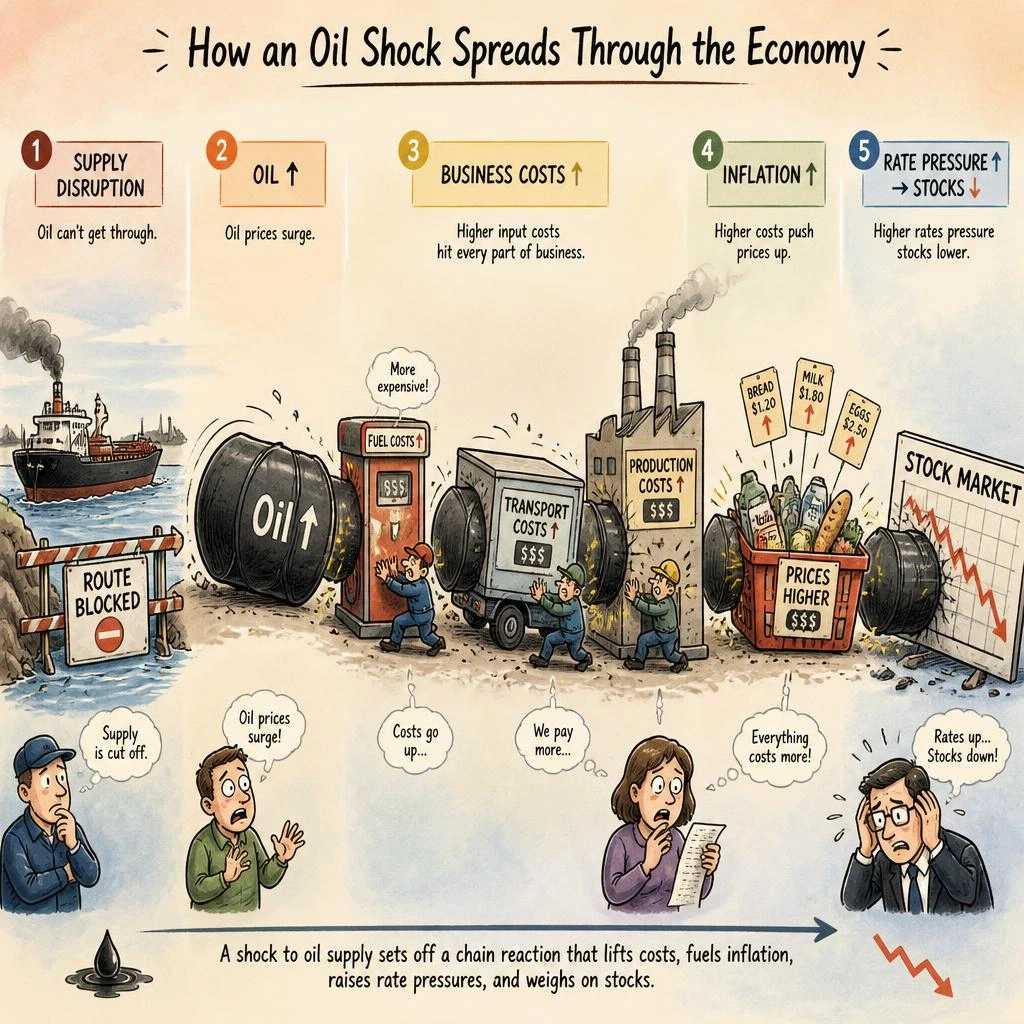
You may not own an oil company, but you almost certainly feel the impact of oil prices.
You buy fuel. You use transportation. You order goods. Companies need to move raw materials and finished products. Oil is woven into much of the economy.
On September 9, 2026, the U.S. Energy Information Administration reported that Brent crude averaged $91 per barrel in August, about $7 higher than in July. The EIA linked the increase to constrained Middle Eastern exports, including disruptions involving Iranian oil exports and attacks affecting Saudi export routes.
By September 16, Brent was around $105.83 per barrel, according to Reuters.
Now imagine you run a logistics company with a monthly fuel bill of $1 million. If higher oil prices push that cost to $1.2 million, you have a problem. You can raise prices, accept lower profits, or find savings elsewhere.
None of those options is particularly comfortable.
Now multiply that effect across airlines, shipping companies, manufacturers, retailers and delivery businesses. Higher energy prices can put pressure on corporate profits even before consumers notice the effect.
But oil can create another problem at the same time: inflation.
If fuel and transportation become more expensive, businesses may raise prices, while households may have less money left after paying for energy and transportation. That can increase inflation pressure and potentially make monetary policy tighter for longer.
So, a geopolitical event affecting oil supplies can eventually make its way through a chain that looks like this:
Oil prices rise → business costs rise → inflation pressure rises → interest-rate expectations change → stock valuations come under pressure.
That is why an event that seems very far away can eventually affect the value of investments sitting in your account.
5. Bonds Start Paying More – So Stocks Have to Compete
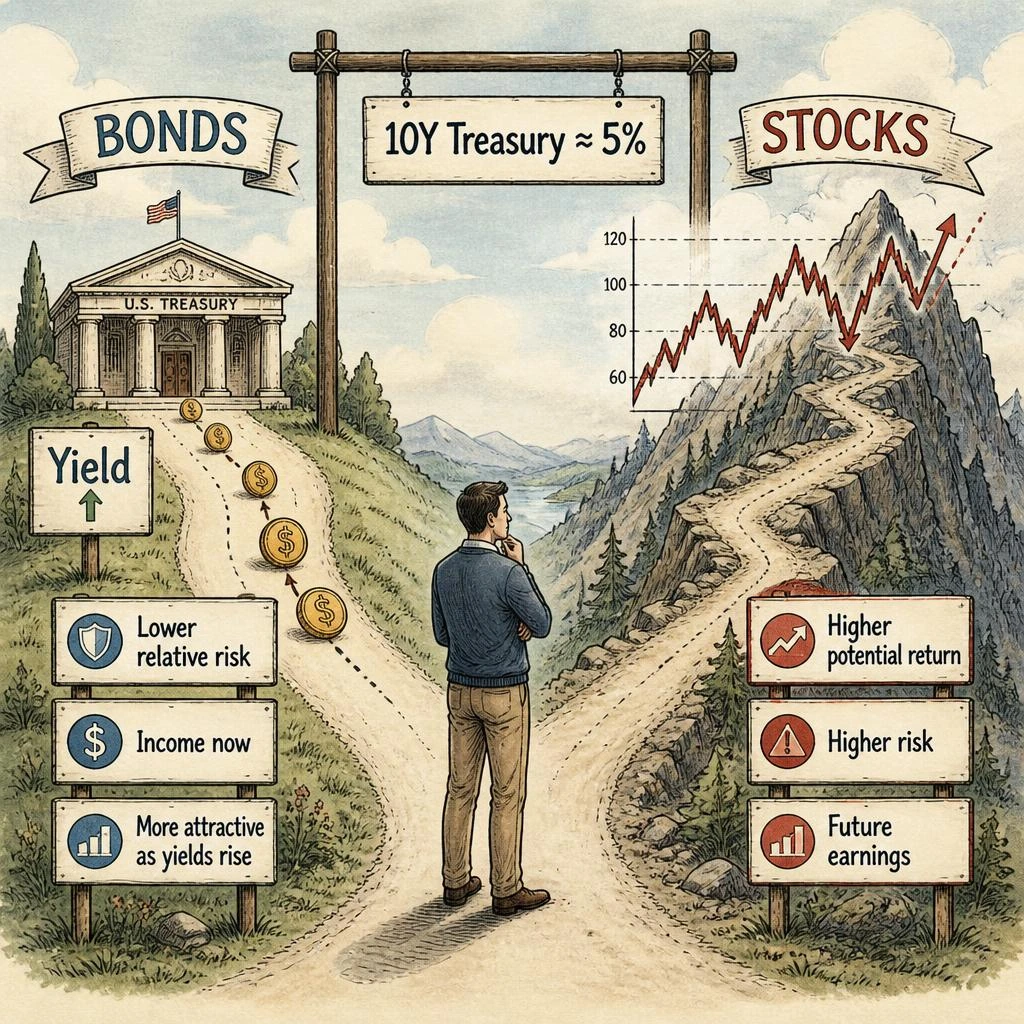
There is a simple question every investor should understand:
Where else could my money go?
Suppose you have $100,000 to invest. You can buy stocks, or you can buy relatively low-risk government bonds.
When government bonds offer very low yields, stocks can look especially attractive because investors need to take more risk to pursue higher returns.
But when bond yields rise significantly, that comparison changes.
The U.S. Treasury’s daily data showed the 10-year Treasury yield at 5.01% on September 16, 2026, after reaching 5.00% on September 15.
That does not mean investors will automatically abandon stocks for bonds. It means the alternative has become more attractive.
Think about it this way: if you are taking substantially more risk by owning a stock, you generally want the opportunity to earn a meaningfully higher return for taking that risk.
This is related to a concept called the equity risk premium. The term sounds complicated, but the idea is simple: investors generally expect some extra potential return for owning something riskier than a relatively safe government bond.
When bond yields rise, the return available from that safer alternative rises too. As a result, investors may become less willing to pay very high prices for stocks.
And this can affect more than your investment portfolio. Higher long-term bond yields can also influence borrowing costs, mortgage rates and business financing conditions.
So when you see the 10-year Treasury yield moving toward 5%, it is not just a statistic for bond traders.
It is part of the broader competition for your investment dollars.
6. A Great Company Can Still Be an Expensive Stock
This may be the most important investing lesson in the entire article:
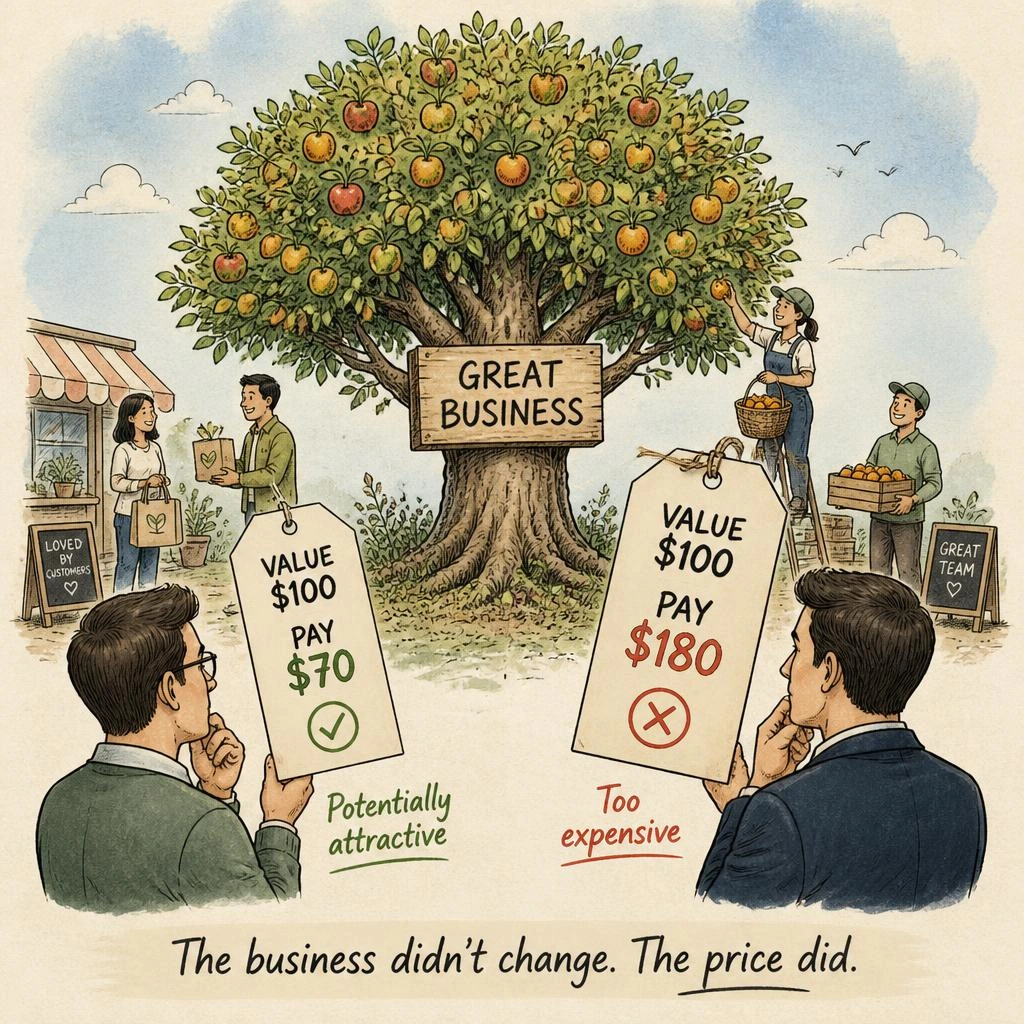
A great company can still be a bad investment at the wrong price.
Imagine you discover a wonderful business. Its products are strong, customers are loyal, and profits are growing.
You might immediately think, “That’s a great investment.”
But there is one more question:
How much are the shares costing you?
Suppose you believe the business is worth $100 per share, but investors have become so enthusiastic that the stock trades at $180.
The business has not suddenly become bad. The problem is that the price already assumes a lot of future success.
This is the basic idea behind valuation.
And current market data show why the distinction matters.
On September 4, 2026, FactSet reported that analysts had increased their aggregate S&P 500 Q3 earnings estimate from $88.64 to $89.69 per share between June 30 and August 31, a 1.2% increase.
So here is the interesting part: earnings expectations can improve while stock prices still fall.
Why?
Because investors do not compare earnings with zero. They compare them with what they already expected and with the price they are paying for those earnings.
Suppose analysts expect a company to earn $10 per share. It earns $11. That sounds excellent.
But if investors had quietly come to expect $13, the result may still disappoint them.
The company did well.
The stock can still fall.
Warren Buffett’s long-standing distinction between market price and underlying business value is particularly relevant here. In his 1989 shareholder letter, he explained intrinsic value in terms of the economic value of a business rather than simply its quoted market price.
Howard Marks approaches the same problem through what he calls second-level thinking: it is not enough to decide whether a company is good; you also have to consider what the market already expects and has already priced in. Oaktree identifies second-level thinking, risk control, and the inevitability of cycles among the enduring themes of Marks’ work.
For you as an investor, that leads to a much better question than “Is this a good company?”
Ask:
“Is this company doing better or worse than what its current stock price already assumes?”
That is where valuation becomes real rather than theoretical.
7. Then There Are the Investors Themselves
So far, we have talked about rates, inflation, growth, oil, bonds, and valuations.
But markets are not made only of numbers.
They are made of people.
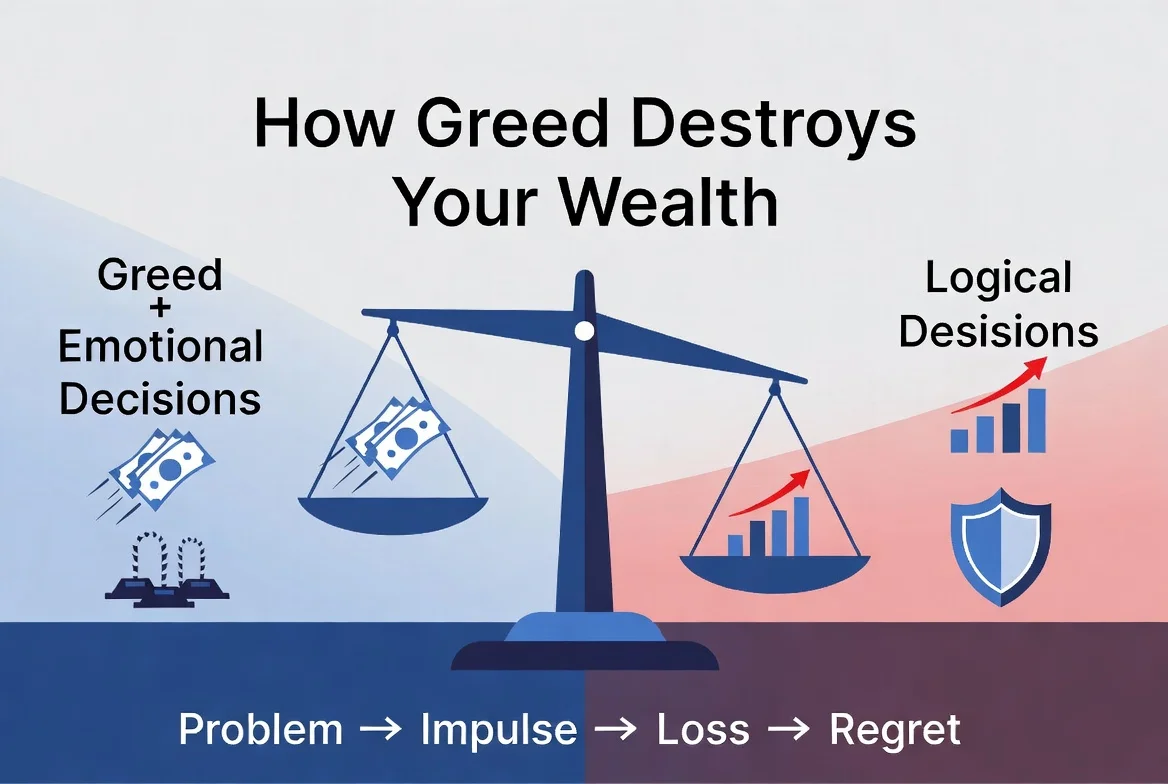
Imagine opening your portfolio and seeing it down 5%. You don’t immediately know why, so you start checking the news. The headlines are negative, social media is full of worried investors, and suddenly you find yourself asking whether you should sell before things get worse.
Now imagine thousands of other investors having the same reaction.
Some sell. Prices fall. The falling prices generate more headlines. Other investors become more nervous and sell as well.
The original problem may not have changed very much, but the market’s reaction to it can make the move larger.
This is one of the areas studied by behavioral finance. In simple terms, it recognizes that investors do not always make decisions like perfectly emotionless calculators. Fear, optimism, loss aversion, momentum, and herd behavior can all influence decisions.
One measure investors watch is the VIX, which reflects expected near-term volatility based on S&P 500 options.
According to Cboe data, the VIX stood at 16.75 on September 16, 2026, compared with a 52-week high of 35.30.
That gives us an important perspective. The market was under pressure, but investors were not experiencing the extreme level of fear associated with the year’s highest volatility.
So, a falling market is not automatically a panic.
Sometimes it is simply a repricing of risk.
That is where Howard Marks’ emphasis on market cycles becomes useful. Oaktree describes the inevitability of cycles as one of the enduring themes in Marks’ investment thinking.
For an individual investor, the practical question is not simply, “Why are prices falling?”
It is:
“Am I reacting to a genuine change in fundamentals, or am I reacting to everyone else reacting?”
Now Put the Seven Pieces Together
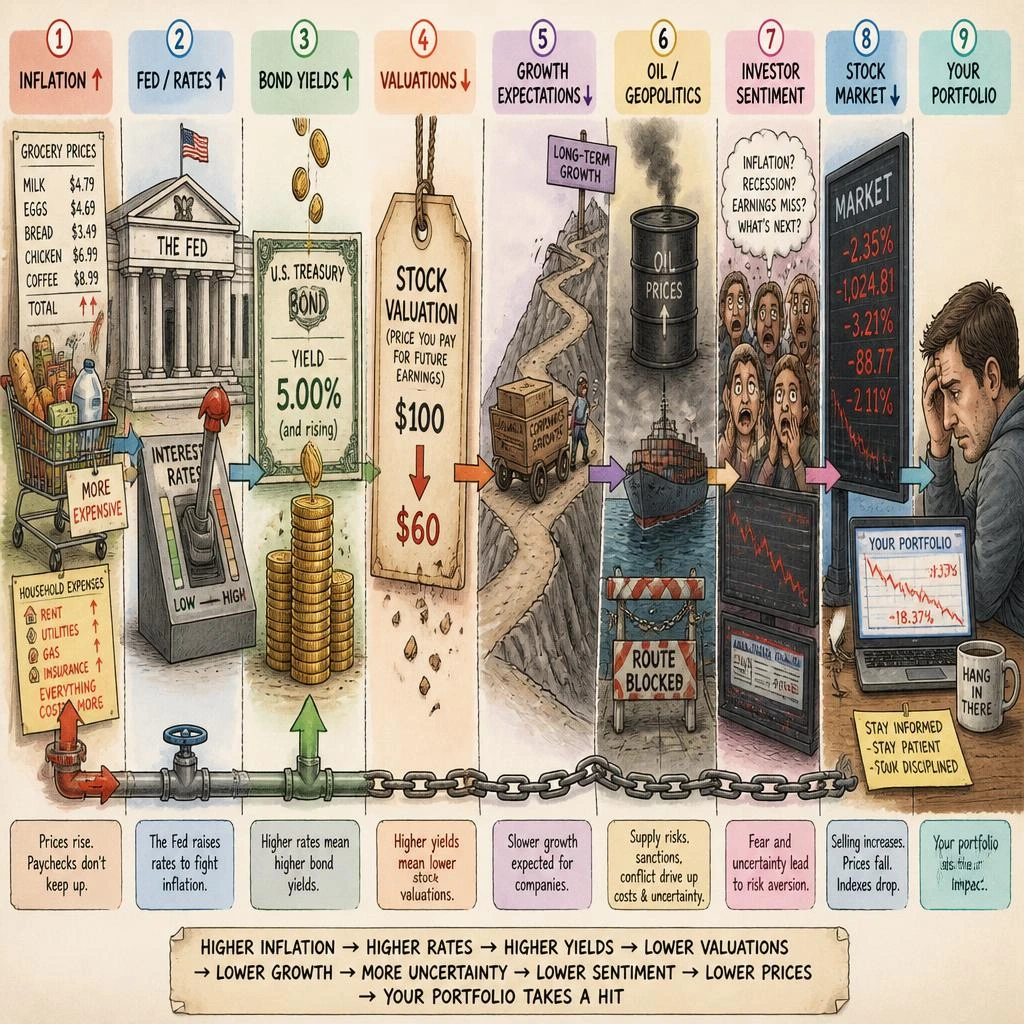
At this point, the market decline should look less like seven unrelated problems and more like one connected story.
Inflation remains elevated, which can make the Federal Reserve more cautious about cutting rates. Higher rates can push bond yields higher and change how investors value future company profits. Slower growth can make investors less confident about future earnings. Higher oil prices can raise both corporate costs and inflation. Rising bond yields can provide investors with a more competitive alternative to stocks. High valuations can leave less room for disappointment, while changing sentiment can amplify the move.
That is why saying “stocks are falling because the Fed raised rates” may be technically true but still incomplete.
The Fed decision may be the trigger.
The market reaction depends on everything that was already happening underneath it.
What Happened in September 2026?
The recent market action provides a useful real-world example of how several of these forces can collide.
On September 14, the semiconductor sector suffered a sharp selloff as investors reassessed expectations surrounding AI spending and technology valuations. Market coverage highlighted concerns about whether extremely large AI investments would generate returns capable of supporting current valuations.
On September 15, the 10-year Treasury yield reached 5.00%, according to Treasury data, while oil prices remained elevated.
Then, on September 16, the Federal Reserve raised its benchmark rate to 3.75%–4.00%. The Dow fell about 1.21%, and the S&P 500 declined around 0.45%. Brent crude remained above $100, and the 10-year Treasury yield reached 5.01%.
Look closely at the sequence.
The market was not responding to one isolated event. Investors were simultaneously thinking about AI expectations, inflation, oil prices, interest rates, bond yields, and valuations.
That is why financial markets can sometimes appear to be falling “for no reason.”
There may actually be too many reasons happening at the same time.
Is a Falling Stock Market Automatically a Bad Sign?
Not necessarily.
A market decline could be a normal pullback, a correction, the early stage of a prolonged bear market, or a repricing caused by changing expectations. Those are very different situations.
A 5% decline tells you the size of the move. It does not tell you what caused it.
That distinction matters because the same percentage decline can mean completely different things depending on what is happening underneath.
If a stock falls because the entire market is being repriced by higher interest rates, that is one situation.
If the company’s revenue collapses, its debt becomes difficult to manage, or something fundamental changes in its business, that is another.
If investors simply pushed the stock’s price far beyond what its earnings could justify, that is something else again.
This is why experienced investors tend to ask:
What changed?
Before asking:
How far did it fall?
What Does This Mean for Your Money?
This is ultimately the question that matters most.
The answer depends heavily on what you actually own.
If your portfolio is concentrated in high-growth companies whose valuations depend heavily on profits expected many years in the future, higher interest rates may matter more.
If you own energy companies, higher oil prices may have a very different effect.
If you hold bonds, rising yields can change the income available from new bonds while also affecting the market value of existing ones.
If you keep substantial amounts of cash, higher rates may improve the return available on savings.
And if your portfolio is heavily concentrated in technology and AI-related companies, a change in expectations around AI spending can affect you more than someone who owns a diversified mix of sectors.
Charles Schwab’s 2026 market outlook has highlighted the growing concentration of market leadership in areas such as AI and energy and the additional vulnerability that can come with concentrated exposure if expectations around the dominant growth themes change.
This is an important personal lesson:
The same market decline can mean very different things to different investors.
The S&P 500 could be down 2% while your portfolio is down 8%, down 1%, or even up.
Your result depends on what you own, how much you own and why you own it.
What Should You Watch Next?
You do not need to follow every economic number released every morning.
Instead, watch the indicators that connect directly to the story.
Inflation
U.S. CPI was 3.4% year over year in August 2026, according to the Bureau of Labor Statistics.
The question to watch is whether inflation continues moving toward the Fed’s 2% goal or remains stubbornly high.
Interest Rates
The Federal Reserve’s benchmark target is now 3.75%–4.00%.
The key question is where investors expect rates to go next.
Treasury Yields
The 10-year Treasury yield reached 5.01% on September 16.
If yields remain high, investors will continue comparing the potential return from stocks with what they can earn from bonds.
Economic Growth
Q2 GDP grew at a 1.5% annualized rate, down from 2.1% in Q1.
The next question is whether the economy is simply cooling or beginning to lose significant momentum.
Oil
Brent averaged $91 per barrel in August, up $7 from July, according to the EIA.
Investors will be watching whether higher energy prices continue feeding into inflation and corporate costs.
Earnings
FactSet reported that S&P 500 earnings expectations were being revised upward during the summer.
The important question, therefore, is not simply whether companies are profitable. It is whether they are performing better or worse than investors already expected.
Sentiment
The VIX was 16.75 on September 16, well below its 52-week high of 35.30.
That can help investors distinguish between a normal repricing and a period of much more extreme market fear.
The Bigger Picture
At the beginning of this article, you opened your investment account and saw red numbers.
That number was real.
But by itself, it did not tell you very much.
Now you can look underneath it.
Perhaps inflation is keeping rates high. Perhaps higher rates are changing stock valuations. Perhaps economic growth is slowing. Perhaps oil is increasing costs. Perhaps bonds are offering investors a more attractive alternative. Perhaps a stock’s price had simply moved too far ahead of its earnings. Or perhaps several of these things are happening at once.
That is how markets work.
They are a constantly changing conversation between money, expectations, businesses, policymakers and millions of investors.
And that is why the most useful question is not:
“How much has the market fallen?”
It is:
“What changed – and how does that change affect what I own?”
That question does not tell you what the market will do next. No article can reliably do that.
What it does give you is something more useful: a framework for understanding what you are seeing.
The next time your portfolio turns red, the most valuable reaction may not be to stare at the number.
Look underneath it.
What changed?
That is where the real story begins.
The 7 Reasons, in Plain English
| Why stocks can fall | What it can mean for you |
| 1. Interest rates rise | Borrowing can become more expensive, and future profits may be valued less highly |
| 2. Inflation stays high | Everyday costs rise, and rates may remain elevated |
| 3. Growth expectations weaken | Investors may expect companies to earn less in the future |
| 4. Oil and geopolitical risks rise | Business costs and inflation can increase |
| 5. Bond yields rise | Safer investments can become more competitive with stocks |
| 6. Valuations get stretched | Even excellent companies can fall if investors paid too much |
| 7. Sentiment turns negative | Fear and changing positioning can amplify the decline |
Final Thought
A falling market is an event.
Understanding why it is falling is information.
The difference matters because the red number on your screen tells you what happened, while the forces behind that number tell you what changed.
And when you understand that difference, market declines become less mysterious – and much easier to put into context.
Frequantly Asked Questions
Why Is the Stock Market Falling?Why Is the Stock Market Falling?
Markets are being pulled by several forces at once: elevated inflation, higher interest rates, rising Treasury yields, slower economic growth, expensive oil and changing expectations. Together, these pressures can reduce stock valuations and increase uncertainty across portfolios and the economy.
What Is Driving the Stock Market Right Now?
Current market pressure reflects a combination of elevated inflation, a 3.75%–4.00% federal funds target, a 5.01% 10-year Treasury yield, slower second-quarter GDP growth, and elevated oil prices. These factors interact rather than affecting stocks independently.
How Do Higher Interest Rates Affect Stock Prices?
Higher interest rates can pressure stocks because they raise borrowing costs and reduce the present value investors assign to future profits. They can also make savings and bonds more attractive, giving investors less reason to pay high prices for equities.
Why Does Inflation Matter to the Stock Market?
Persistent inflation matters because it can keep central banks from cutting rates quickly. Higher rates can raise borrowing costs, squeeze household purchasing power, and make future corporate profits less valuable today, creating pressure on both company earnings and stock valuations.
Can Stocks Fall Even When the Economy Is Still Growing?
Stock prices reflect expectations about future earnings, not just today’s economic data. When growth slows, investors may lower their forecasts for sales and profits. A company can keep growing and still see its share price fall if expectations weaken enough.
Why Do Rising Oil Prices Affect Stocks?
Higher oil prices can hurt stocks through two channels: they raise costs for energy-intensive businesses and can increase inflation. That may reduce consumer purchasing power while encouraging tighter monetary policy, creating slower growth, higher business costs, and additional valuation pressure.
Why Do Rising Bond Yields Put Pressure on Stocks?
When Treasury yields rise, bonds can offer investors more income with less risk than stocks. That changes the comparison between the two assets. Investors may demand greater returns from equities, making highly valued stocks harder to justify at current prices.
Why Can a Good Company Still Have a Falling Stock Price?
A strong business is not automatically a good investment at any price. If a stock already reflects very optimistic expectations, even solid earnings can disappoint investors. When price falls faster than the business changes, valuation – not business quality – is the issue.
Can Investor Sentiment Make a Stock-Market Decline Worse?
Investor sentiment can amplify a market decline because fear, uncertainty, and momentum can trigger additional selling. Falling prices can create negative headlines, which may cause more investors to sell. The feedback loop can make a fundamental problem look much larger.
What Happened in the Stock Market in September 2026?
In September 2026, several pressures appeared together: the Fed raised rates, Treasury yields moved around 5%, oil remained elevated and investors reassessed growth and technology expectations. The combination illustrates why market declines often have several interacting causes.
Is a Falling Stock Market Always a Bad Sign?
No. A market decline can be a normal pullback, a correction, a longer bear market or a response to changing expectations. The size of a decline tells you what happened to prices, but not necessarily why prices fell.
What Does a Falling Stock Market Mean for My Money?
The effect depends on what you own. Higher rates may affect growth stocks more, rising oil can influence energy-sensitive businesses, and higher bond yields can change asset-allocation choices. A broad market decline can therefore affect different portfolios very differently.
What Should Investors Watch When the Stock Market Falls?
Watch the forces behind the decline rather than the index alone: inflation, interest rates, Treasury yields, economic growth, oil prices, corporate earnings, and investor sentiment. These indicators help explain whether the market is responding to changing fundamentals, valuations, or expectations.